

Tracking files are essential for companies that want structured operations, reliable reporting, and real-time visibility across teams. Whether you manage projects, sales activities, documents, billable hours, or customer files, the ability to track, monitor, and analyze data directly impacts performance and decision-making.
Odoo is a suite of open-source business applications that can streamline operations for small businesses. The core idea behind Odoo's time tracking feature is its straightforward and practical design, making it easy for users to understand and utilize its core functionality.
While many companies still rely on Excel files stored locally, modern businesses increasingly adopt Odoo, an open-source ERP system that transforms tracking files into integrated, automated, and collaborative workflows. Supported by Doodex, companies can configure Odoo to match very specific operational needs. It is also easy to install Odoo modules, allowing businesses to tailor the system to their specific requirements.
Key Takeaways
- Tracking files are essential for structured operations and decision-making
- Excel is useful but limited for collaboration and automation
- Odoo centralizes tracking, documents, and reporting in one system
- Real-time access improves team efficiency and accountability
- Detailed reports and analytics support smarter management decisions
Key Takeaways
What Is a Tracking File?
Why Tracking Files Matter in Modern Operations
The Benefits of Using Odoo for Tracking File
1. Data Centralization Across Modules
2. Real-Time Tracking and Collaboration
3. Seeing the Whole Picture: The Dashboard Module
4. Generate Detailed Reports and Analytics
Tracking File with Odoo: Core Concepts
1. Form View and Record Structure
2. Statuses, Stages, and Milestones
3. Access Rights and User Control
Setting Up Tracking Files
Core Odoo Modules
Time Tracking and Management
Customization and Personalization
Excel Activity Tracking Dashboard: Still Common, But Limited
File Monitoring Table with Odoo
Task and Project Management with Odoo
Real-Time Reporting and Detailed Reports
Comparison Between Odoo and Excel for Tracking Files
Conclusion
FAQs
What Is a Tracking File?
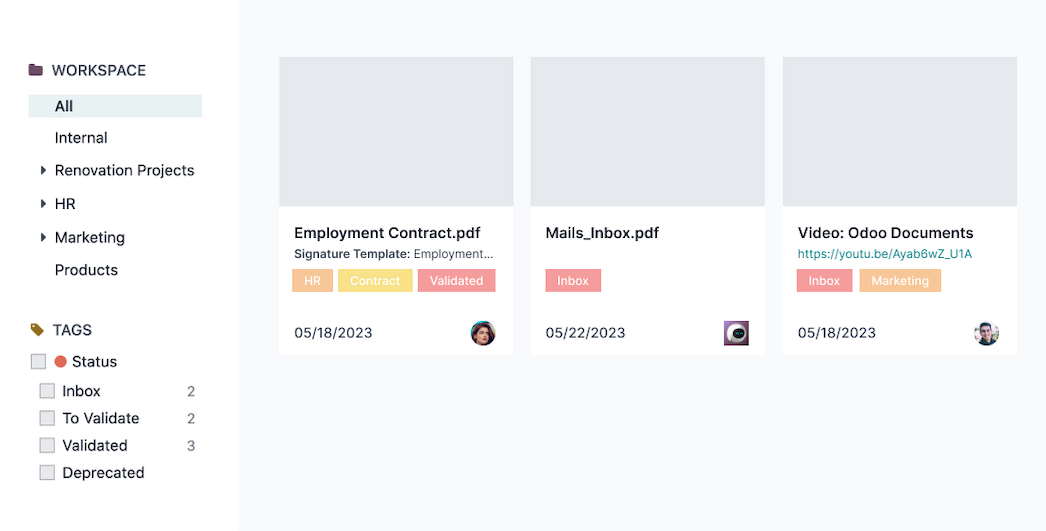
Tracking file example in Odoo
A tracking file is a structured record used to monitor tasks, projects, documents, or performance indicators over time. It typically includes:
- Tasks or files to manage
- Responsible users or managers (can also include contact details and preferences for improved communication and customer relationship management)
- Statuses and stages
- Dates, milestones, and timelines
- Notes, logs, and comments (notes can be used to document key points or instructions directly within the platform)
- Costs, billable hours, or revenues
Tracking files help companies identify bottlenecks, control deadlines, manage resources, and ensure accountability across teams.
Why Tracking Files Matter in Modern Operations
As companies grow, tracking quickly becomes complex. Multiple teams, customers, documents, and deadlines increase the risk of errors when data is fragmented across spreadsheets, emails, or files stored locally.
Without a centralized system, companies face:
- Limited collaboration
- Manual updates and duplicated data
- No real-time overview
- Difficulty generating detailed reports
This is where Odoo changes the game.
The Benefits of Using Odoo for Tracking Files
1. Data Centralization Across Modules
Odoo centralizes tracking data across Odoo modules such as Project, Sales, Accounting, Invoicing, Documents, and CRM. Every record is connected, eliminating disconnected Excel files and manual copy-paste.
2. Real-Time Tracking and Collaboration
All users access the same data in real time, whether on desktop or mobile. Teams can update statuses, log notes, upload documents, and communicate through integrated mail and activity logs.
3. Automation Without Heavy Technical Skills
Unlike Excel macros that require advanced technical skills, Odoo provides built-in automation:
- Automatic status changes
- Activity reminders
- Mail notifications
- Workflow triggers between modules
4. Generate Detailed Reports and Analytics
With Odoo, companies can generate detailed reports instantly. Reporting tools allow filtering by date, user, customer, project, or status, giving managers a clear overview of performance, costs, and progress.
From Tracking Files to Optimize Operations
Consult Doodex experts to optimize your Odoo Tracking setup
Tracking File with Odoo: Core Concepts
1. Form View and Record Structure
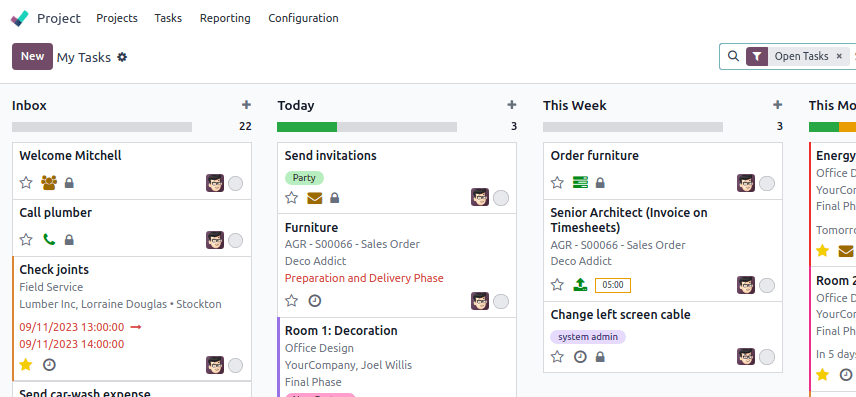
Task tracking and project management in Odoo using Kanban view
Each tracking file in Odoo is a record, displayed in a structured form view. This form contains:
- Key fields (status, responsible, date, stage)
- Notes and logs
- Linked documents
- Related sales, invoices, or tasks
This structure ensures consistency and easy navigation.
2. Statuses, Stages, and Milestones
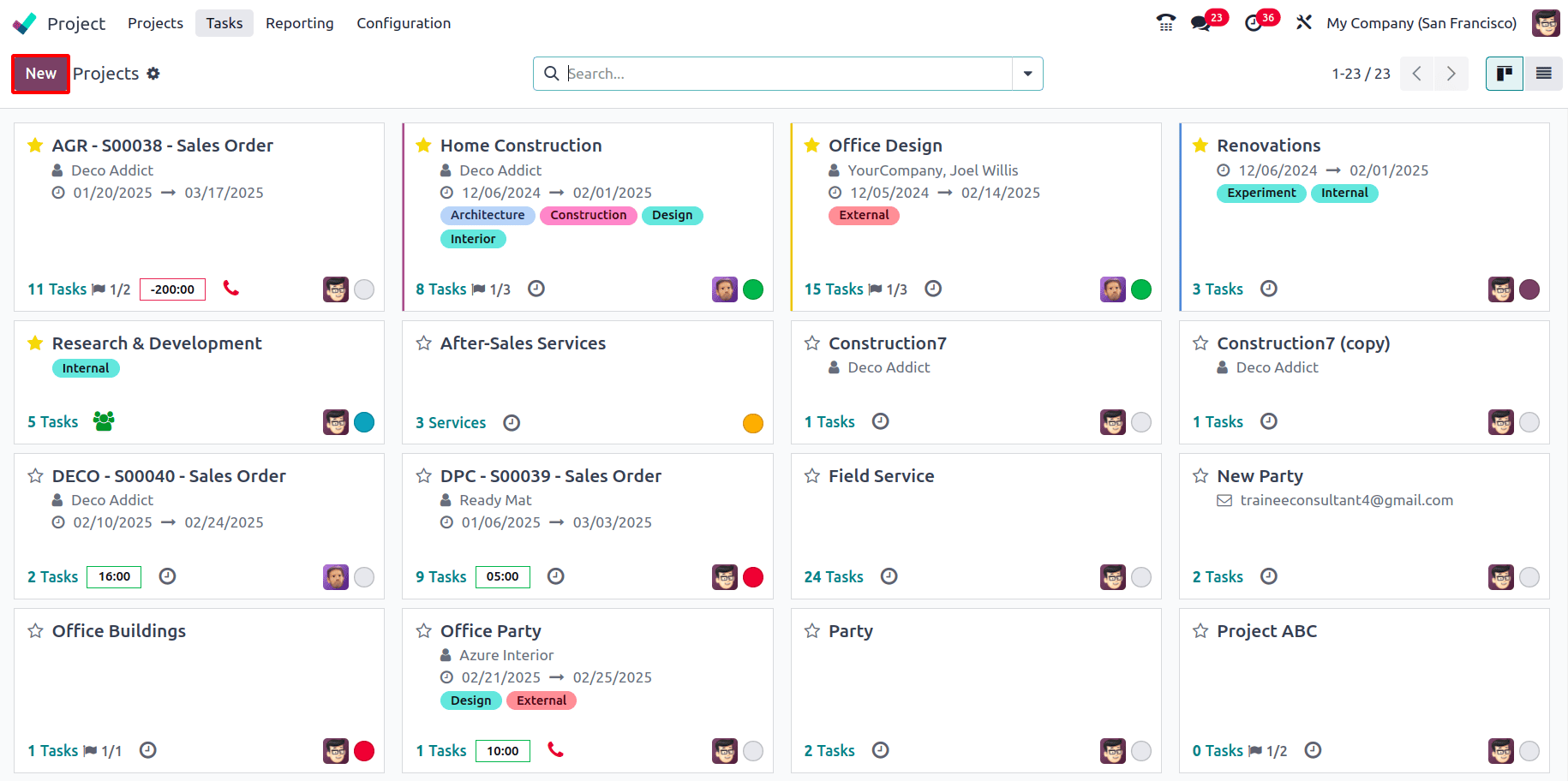
Project tracking and task management overview in Odoo Project
Odoo allows companies to define custom stages and milestones:
- New
- In progress
- Waiting
- Done
- Closed
Statuses are visible at a glance and updated automatically based on workflow rules.
3. Access Rights and User Control
Access rules ensure each user sees only relevant data. Managers get a global overview, while employees focus on assigned tasks or files.
Permissions can be enabled at the folder level in Odoo to control access to documents, ensuring only authorized users can view or edit specific files.
Setting Up Tracking Files
Setting up tracking files in Odoo is a straightforward yet powerful way to enhance project management and task monitoring. The system is designed to be intuitive while remaining flexible enough to adapt to different operational needs.
Key steps and capabilities include:
- Users navigate to the relevant Odoo module such as “Project Management” or a custom “Tracking” module and click the “Create” button to start a new record.
- This action opens a form view, where essential details such as project name, tasks, deadlines, and assigned managers can be entered and managed in one place.
- The form view is highly customizable, allowing users to add or remove fields according to their specific needs. Additional tools such as search bars help quickly locate particular tasks or projects.
- Advanced configuration options can be unlocked by enabling developer mode, providing greater control over how tracking data is structured and displayed.
- Odoo modules are designed to work together, making it easy to integrate a tracking file with other modules and obtain a consolidated overview of project progress.
- This flexibility allows every team, manager, or department to create tracking files aligned with their workflows, reinforcing Odoo as an essential solution for efficient and well-organized project management.
Core Odoo Modules
Odoo’s strength lies in its suite of core modules, each designed to manage a different aspect of business operations. Together, these modules form an integrated system that supports day-to-day activities, reporting, and long-term decision-making.
Key modules and capabilities include:
- The “Project Management” module is ideal for creating and managing projects, tracking billable hours, and generating detailed reports on team performance and project status.
- The “Sales” module streamlines the sales process, covering everything from lead management to order fulfillment.
- The “Accounting” module handles financial transactions, invoicing, and expense tracking with ease.
- By installing and integrating these modules, businesses can manage everything from sales and accounting to project timelines and resource allocation within a single platform.
- Odoo apps further extend functionality. For example, the “Odoo Website” app allows you to build and manage your online presence, while the “Odoo Mobile” app lets you access your data and operations on the go.
- This integrated approach improves efficiency and enables users to generate detailed reports and analytics, supporting smarter decision-making across all areas of the business.
Time Tracking and Management
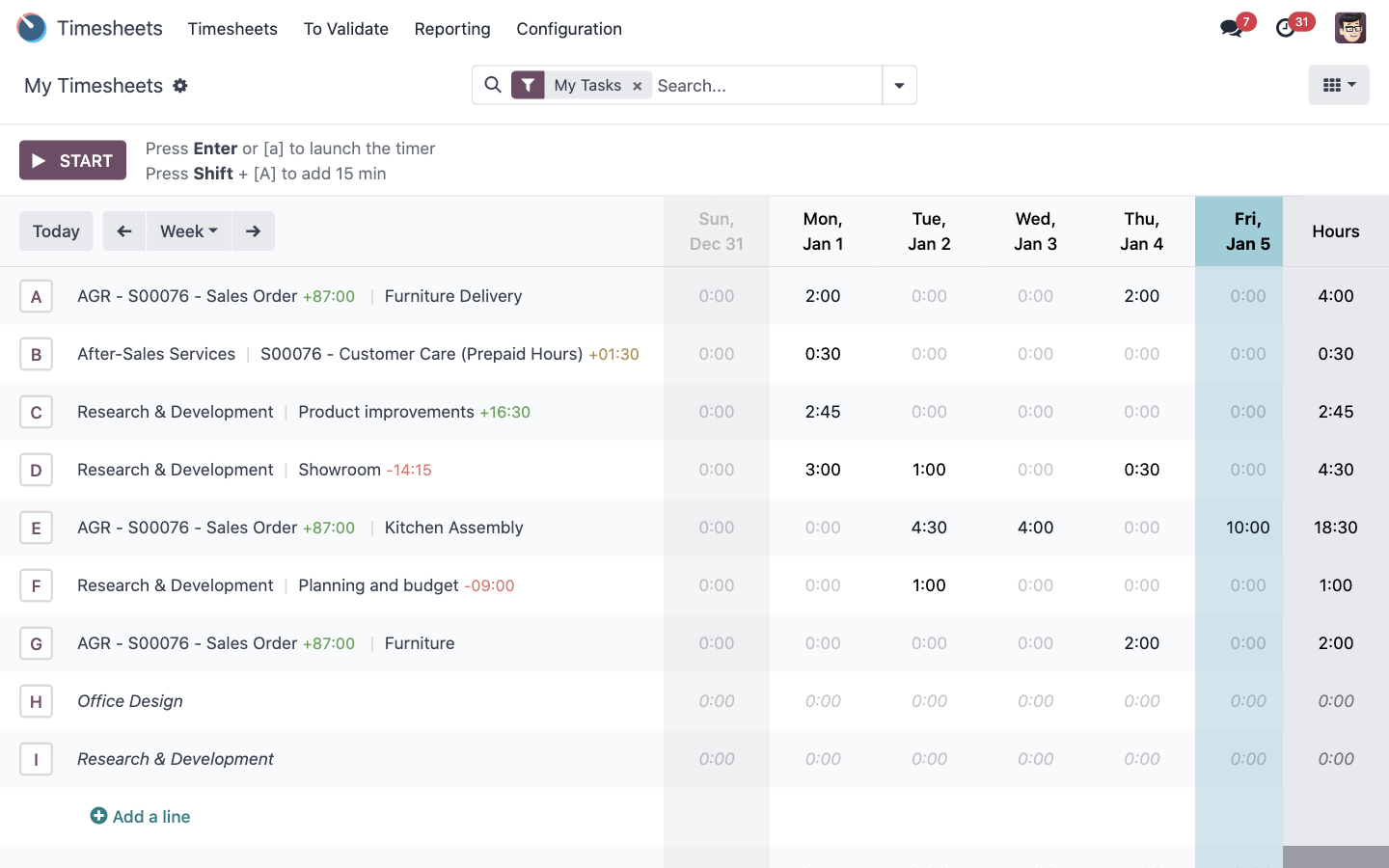
Time tracking and timesheet management in Odoo
Effective time tracking and management are at the heart of successful project management in Odoo. The system is designed to give teams visibility into time usage, progress, and costs without adding unnecessary complexity.
Key features and benefits include:
- The dedicated “Time Tracking” module allows users to log time spent on individual tasks and projects, making it easy to monitor billable hours and project progress.
- Teams can create timesheets, set up milestones, and distribute costs for complex projects, all within the same system.
- Integration with other Odoo modules such as “Invoicing” and “Accounting” means that billable hours can be automatically linked to client invoices, streamlining the billing process.
- Managers can set up a timeline to visualize project phases or use the Gantt view to identify task dependencies and deadlines.
- Odoo’s time tracking features also provide detailed reports and analytics, helping businesses optimize resource allocation, improve team productivity, and ensure projects stay on track and within budget.
Customization and Personalization
Odoo’s open-source platform offers unparalleled customization and personalization, empowering businesses to adapt the software to their exact requirements. Its flexible architecture ensures that data, workflows, and reporting align precisely with operational needs.
Key customization capabilities include:
- Users can create custom forms and fields using the form view, ensuring that every piece of data relevant to their operations is captured and organized.
- The tree view feature supports custom data analysis, making it easy to manage and review large sets of information efficiently.
- For businesses with unique workflows, developers can build custom modules or integrate Odoo with other software applications to extend functionality further.
- Whether you need to track specific KPIs, manage unique project stages, or create specialized reports, Odoo provides the flexibility to support these requirements.
- Odoo’s adaptable architecture ensures you can create, manage, and analyze data in a way that aligns perfectly with your business goals.
Customize Your Tracking Files in Odoo
Tailor Odoo tracking files, fields, and workflows to match how your teams actually work
Excel Activity Tracking Dashboard: Still Common, But Limited
Excel dashboards remain popular for activity tracking because they are familiar and flexible.
Example: Excel Activity Monitoring Table
Activity | Responsible | Start Date | End Date | Status | Comments |
Project A | Alice | 01/07/2024 | 15/07/2024 | In progress | |
Task B | Bob | 05/07/2024 | 10/07/2024 | Finished | RAS |
Sales tracking | Charlie | 01/07/2024 | 31/07/2024 | In progress | Forecast adjusted |
Excel works for small teams, but problems appear when:
- Files are stored locally
- Multiple users edit simultaneously
- Data must connect to sales, invoicing, or accounting
File Monitoring Table with Odoo
Odoo replaces static tables with dynamic tracking files connected to customers, documents, and operations.
Example: File Tracking in Odoo
File | Customer | Opening Date | Status | Manager | Notes |
File A | Client X | 01/07/2024 | Open | Alice | Waiting response |
File B | Client Y | 02/07/2024 | Closed | Bob | Resolved |
File C | Client Z | 03/07/2024 | In progress | Charlie | Docs received |
Each file links to:
- Contacts
- Documents
- Invoices
- Emails
- Logs and history
✨Pro Tip
Let Usage Shape Automation
Begin with straightforward tracking files using core Odoo modules.
Pay attention to how users interact with fields, stages, and statuses, then refine the structure and introduce automation gradually.
Usage clarity → clean data → accurate reporting and scalable automation
Task and Project Management with Odoo
Tracking files are deeply integrated into project management. Tasks can include:
- Deadlines and priorities
- Assigned employees
- Billable hours
- Costs and revenues
- Dependencies and milestones
Managers can monitor progress through Kanban, list, calendar, or timeline views.
Real-Time Reporting and Detailed Reports
Generate Detailed Reports Instantly
Odoo reporting tools allow users to:
- Filter by date, project, or customer
- Group by manager, stage, or status
- Export reports for accounting or management, allowing users to decide when to export and giving them control over data sharing
Analytics Across Departments
Tracking data feeds analytics dashboards for:
- Sales performance
- Project profitability
- Resource utilization
- Customer success metrics
This level of insight is nearly impossible to maintain reliably with Excel alone.
Comparison Between Odoo and Excel for Tracking Files
Flexibility and Customization
- Excel: Flexible but fragile and manual
- Odoo: Configurable forms and workflows aligned with business logic. Odoo also facilitates the creation of customized templates or follow-up files tailored to specific user or company requirements.
Collaboration and Access
- Excel: Limited, especially when stored locally
- Odoo: Real-time collaboration with role-based access
Automation and Integration
- Excel: Requires macros and advanced skills
- Odoo: Native automation and seamless integration with sales, invoicing, and accounting
Move Beyond Excel Tracking
Talk with experts to move from Excel to connected Odoo tracking
Conclusion
Tracking files evolve from simple tables into strategic management tools when implemented in Odoo. By centralizing data, enabling real-time collaboration, and automating workflows, Odoo eliminates the limitations of Excel-based tracking.
For companies managing projects, customers, documents, and costs, tracking file with Odoo provides visibility, control, and scalability. With the right configuration and guidance, Odoo becomes the backbone of efficient, data-driven operations.
FAQs
It is a structured record in Odoo used to track tasks, projects, files, or activities with statuses, users, and logs.
Yes, especially when tracking requires collaboration, automation, and integration with other systems.
Basic tracking can be created without developer mode. Advanced customization may require it.
Project, Sales, CRM, Documents, Accounting, and custom modules depending on needs.
Yes, Odoo tracks billable hours, costs, and revenues directly in projects and tasks.
Yes. Odoo scales from small teams to large enterprises.
Yes, Odoo provides mobile access for real-time tracking anywhere.