Running a business today is no longer just about selling products or services. Companies must manage sales pipelines, inventory flows, accounting accuracy, project execution, HR operations, and customer relationships at the same time. When these functions rely on separate tools, businesses often face data silos, manual work, reporting delays, and costly operational mistakes.
This is exactly why many organizations start looking for ERP systems. However, when evaluating traditional ERP solutions, businesses frequently encounter new challenges such as hefty licensing fees, long implementation cycles, unnecessary complexity, and rigid workflows. Instead of simplifying operations, these systems often introduce additional operational and financial burdens.
This is where Odoo stands out as an ideal solution for small businesses and growing companies. Odoo offers a modern ERP approach that adapts to real business processes rather than forcing businesses to adapt to the system. As a result, companies gain flexibility, scalability, and better control over daily operations.
So, why choose Odoo over traditional ERP systems? Odoo provides a single platform that consolidates core business processes, helping organizations scale efficiently, control costs, and gain full visibility across operations. More importantly, it enables businesses to turn ERP into a strategic asset rather than another IT burden.
This guide answers those questions in detail. It explains how Odoo helps businesses streamline operations, automate processes, and make data-driven decisions. With the right approach, Odoo delivers real business value without breaking the bank.
Key Takeaways
- Odoo is a modern, open-source ERP built for flexibility and growth
- It replaces multiple tools with a unified platform
- Odoo is a cost-effective ERP solution with strong ROI
- Modular architecture allows businesses to scale efficiently
- Advanced reporting enables data-driven decisions
- Implementation success depends on the right partner
- Doodex combines technical expertise with real business understanding
Key Takeaways
What Is Odoo ERP?
Why Choose Odoo Over Traditional ERP Solutions?
1. The Problem with Traditional ERP Systems
2. How Odoo Breaks the Traditional ERP Model
Business Needs Assessment: Is Odoo Right for You?
Key Benefits of Odoo ERP
1. All-in-One Platform for Business Management
2. Modular and Fully Integrated ERP Environment
3. Cost-Effective ERP Solution with High ROI
4. Scalable for Growing Businesses
5. Intuitive and User-Friendly Interface
6. Advanced Project and Inventory Management
7. Data-Driven Decisions with Advanced Reporting
8. Easy Integration with Third-Party Tools
9. Customization with Odoo Studio and Open Source Flexibility
Odoo ERP Services: Why Implementation Matters
Why Choose Doodex as Your Odoo Partner?
1. From Implementation to Product Engineering
2. What Makes Doodex Different?
3. Why This Matters for Your Business
4. Beyond Go-Live: A Long-Term ERP Partner
How to Get Started with Odoo
Conclusion
FAQs
What Is Odoo ERP?
Odoo is an open-source ERP (Enterprise Resource Planning) platform designed to manage business operations through a single, fully integrated system. Instead of relying on multiple disconnected tools, Odoo brings together CRM, Sales, Accounting, Inventory Management, Manufacturing, Project Management, HR, Marketing, and eCommerce into one unified platform.
Unlike traditional ERP software, Odoo is built with modularity and flexibility at its core, allowing companies to select and implement only the modules or features they need. Businesses can start with only the modules they need and expand over time as requirements evolve.
There are two main editions:
- Odoo Community – free, open-source, ideal for companies starting their ERP journey.
- Odoo Enterprise – paid version with advanced features, enterprise support, and enhanced performance.
Odoo ERP is an open-source platform that has been in active development since 2005.
Supported by a global Odoo community and millions of Odoo users worldwide, Odoo's open-source model is supported by a vibrant global community of developers, users, and partners. The platform continues to grow rapidly, making it one of the most adopted ERP solutions for small businesses, SMEs, and growing companies.
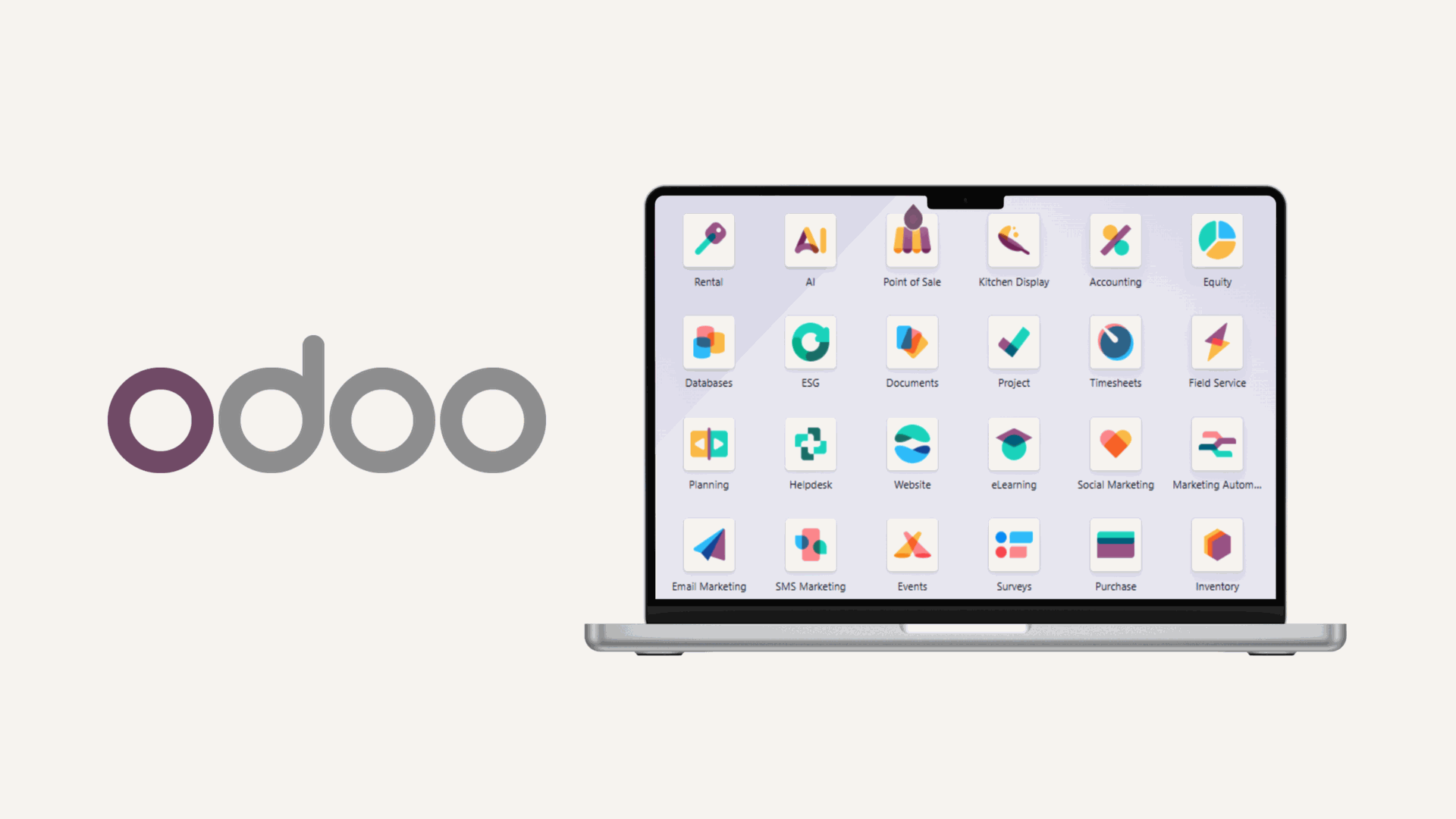
Odoo ERP combines all business apps in one system
Why Choose Odoo Over Traditional ERP Solutions?
1. The Problem with Traditional ERP Systems
Traditional ERP systems were designed decades ago for large enterprises with massive IT teams and long planning cycles. As a result, many companies experience:
- Significant upfront investment before seeing any value
- Hefty licensing fees that grow as users increase
- Rigid workflows that do not match real business processes
- Long ERP implementation timelines
- Heavy dependency on your IT team to manage, customize, and maintain the system
- Unnecessary complexity that slows adoption
For small companies and growing businesses, this approach is no longer sustainable.
2. How Odoo Breaks the Traditional ERP Model
Odoo takes a fundamentally different approach. Instead of forcing businesses to adapt to the system, Odoo adapts to the business. Its open-source foundation, modular architecture, and intuitive interface allow companies to implement ERP in a practical, scalable, and cost-effective way.
This is why more organizations today choose Odoo ERP as the backbone of their operations.
Business Needs Assessment: Is Odoo Right for You?
Selecting the right ERP system is a strategic decision that can significantly impact your business operations. Before choosing Odoo ERP, it is essential to assess your business needs to ensure the solution aligns with your goals. Unlike traditional ERP solutions that require significant upfront investment and rigid workflows, Odoo offers a cost effective ERP solution that adapts to your unique business requirements.
By mapping core processes such as sales, marketing, inventory management, accounting, and project management, businesses can identify inefficiencies and opportunities for improvement. Thanks to its modular design and the support of the Odoo community, Odoo enables growing businesses to streamline workflows, automate processes, and scale operations using a flexible and customizable ERP system.
To determine if Odoo is the right fit for your business, consider these key factors:
- Business Requirements: Analyze your specific business needs and identify where Odoo ERP can deliver the most value. Consider industry-specific challenges, such as regulatory compliance, and how Odoo’s modules can help you meet these demands.
- Current ERP Systems: Evaluate your existing ERP systems or business management tools. Identify their limitations and assess how Odoo ERP can overcome these challenges, offering a more integrated and comprehensive solution.
- Cost Efficiency: Review the implementation costs and ongoing support expenses associated with Odoo ERP. Compare these to traditional ERP solutions to understand the cost effectiveness and long-term savings Odoo offers.
- Customization: Determine whether your business requires tailored workflows or unique features. Odoo’s modular architecture and tools like Odoo Studio make it easy to customize the system to fit your exact needs, unlike traditional ERP solutions that can be inflexible and costly to modify.
- Integration with Third-Party Tools: Consider how Odoo can connect with your existing third-party tools and platforms. Seamless integration enhances your business operations and ensures a unified ERP environment.
By carefully assessing these factors, you can make an informed decision about whether to choose Odoo ERP for your business. With its user friendly interface, scalable design, competitive pricing, and support from expert Odoo consultants, Odoo enables smooth ERP implementation and helps businesses streamline workflows, automate processes, and leverage the Odoo ecosystem as a long-term growth platform.Key Benefits of Odoo ERP
Asses Your ERP Needs
Discuss your workflows, costs, and growth plans with our Odoo consultants
Key Benefits of Odoo ERP

Odoo: one platform for all business operations
1. All-in-One Platform for Business Management
One of the biggest reasons why companies choose Odoo is its all-in-one platform approach. Odoo replaces multiple tools with a single unified system, covering:
- Sales & CRM
- Accounting & Finance
- Inventory Management
- Manufacturing & Supply Chain
- Project Management
- HR & Payroll
- Marketing Automation
- Website & eCommerce
Because all modules share the same database, businesses gain centralized data and eliminate data silos. Sales teams, finance departments, and operations teams work with the same real-time information, improving collaboration and decision-making.
2. Modular and Fully Integrated ERP Environment
Odoo is often compared to LEGO blocks. Each module works independently, yet integrates seamlessly with others. Businesses can enable only what they need and avoid unnecessary complexity.
For example:
- Sales orders automatically generate delivery orders in Inventory
- Inventory movements update Accounting in real time
- CRM opportunities feed directly into Sales and Invoicing
This fully integrated ERP environment allows companies to streamline workflows without rebuilding their systems from scratch.
3. Cost-Effective ERP Solution with High ROI
Cost is one of the biggest challenges when choosing ERP software. Odoo is widely recognized as a cost-effective ERP solution because it offers:
- No hefty licensing fees compared to traditional ERP
- Flexible Odoo pricing based on actual usage
- Lower implementation costs due to modular rollout
- Reduced maintenance expenses
Instead of paying for features you do not use, Odoo allows companies to invest gradually while achieving faster ROI. This makes Odoo ideal for small businesses and SMEs that need enterprise-level capabilities without enterprise-level costs.
4. Scalable for Growing Businesses
Odoo grows with your company, making it ideal for a growing business. Whether you operate a single location or manage multi-company, multi-warehouse, and multi-country environments, Odoo scales efficiently.
As business needs evolve, companies can:
- Add new modules
- Increase users
- Enable advanced reporting
- Integrate third-party tools
Odoo's scalability allows small businesses to start with a few essential modules and expand as they grow. As of 2026, Odoo is recognized as a premier all-in-one business management solution for small and mid-sized enterprises, thanks to its modular design and advanced features.
This scalability ensures Odoo remains relevant as operations expand.
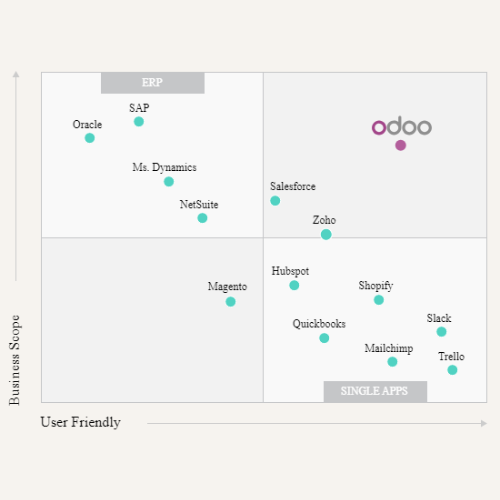 Odoo compared to ERP and single apps
5. Intuitive and User-Friendly Interface
Unlike traditional ERP systems known for complex interfaces, Odoo is designed with a modern and intuitive interface. This reduces training time and accelerates adoption across teams.
Employees can quickly navigate dashboards, manage tasks, and access reports without technical expertise. A user-friendly interface is critical to ERP success, and Odoo excels in this area.
6. Advanced Project and Inventory Management
Odoo offers robust project management and inventory management capabilities, helping businesses control operations in real time.
With Odoo, companies can:
- Track project progress and profitability
- Manage inventory levels accurately
- Automate replenishment rules
- Monitor lead times and supplier performance
These features help organizations reduce errors, optimize stock, and improve delivery performance.
7. Data-Driven Decisions with Advanced Reporting
Modern businesses rely on insights, not assumptions. Odoo provides advanced reporting dashboards that deliver real-time visibility into business performance.
Managers can track:
- Sales trends
- Inventory valuation
- Profit margins
- Operational KPIs
With centralized data and analytics, decision-makers can respond faster and plan strategically.
8. Easy Integration with Third-Party Tools
Odoo integrates seamlessly with third-party tools such as payment gateways, logistics providers, eCommerce platforms, and external accounting software. This flexibility allows businesses to keep existing tools while benefiting from a centralized ERP system.
9. Customization with Odoo Studio and Open Source Flexibility
Every business is unique. Odoo’s open-source architecture, supported by a global community of developers, users, and partners, allows companies to customize Odoo according to specific business requirements. This global community ensures Odoo benefits from extensive community support, driving continuous updates and improvements that keep the software ahead of competitors. Odoo's community-driven development model guarantees the software is always evolving to meet new business needs.
Using Odoo Studio, users can:
- Modify forms and workflows
- Create custom fields
- Adjust business logic without heavy coding
For deeper customization, experienced Odoo partners can develop custom modules that extend functionality beyond standard features.
Odoo ERP Services: Why Implementation Matters
Choosing Odoo is only part of the journey. ERP implementation determines whether the system becomes a competitive advantage or a costly failure.
Successful implementation requires:
- Strategic planning
- Business process mapping
- Technical expertise
- Change management
- Ongoing support
This is why working with expert Odoo consultants is critical.
Turn Odoo into a Competitive Advantage
Expert implementation aligned with your business processes
Why Choose Doodex as Your Odoo Partner?
Doodex is an official Odoo partner with 12+ years of experience delivering ERP solutions across multiple industries and regions. However, what truly differentiates Doodex is not only its implementation expertise, but its ability to extend Odoo through real, production-ready modules used by businesses worldwide.
Unlike many Odoo partners who rely solely on standard features, Doodex actively builds custom Odoo modules to solve operational gaps commonly faced by growing companies. This product-driven mindset allows Doodex to deliver ERP systems that are not only functional at go-live, but scalable, stable, and aligned with real operational needs.
1. From Implementation to Product Engineering

Doodex Odoo modules available on Odoo Apps Marketplace
Doodex does not treat Odoo as a static ERP system. Instead, Odoo is treated as a business platform that must evolve with operational realities.
This philosophy is reflected in Doodex’s growing portfolio of Odoo modules published on the Odoo Apps marketplace. These modules are designed to address recurring challenges seen across real projects, including:
- Sales & POS margin control
- CRM accuracy & sales analytics
- Purchasing flexibility
- Product traceability & reporting
- User productivity & system usability
- Integrated communication & scheduling
These modules are not experimental. They are used by real companies, maintained across Odoo versions, and designed to integrate cleanly into standard Odoo workflows. This demonstrates technical depth that goes beyond configuration and positions Doodex as a true contributor to the Odoo ecosystem.
2. What Makes Doodex Different?
This product engineering capability is reinforced by a set of core principles that guide every Doodex project:
- Clear Business Processes
End-to-end process mapping aligned with real operations, ensuring Odoo reflects how the business actually works. - User-Friendly Odoo Systems
Fast adoption through intuitive workflows, reduced complexity, and usability focused configurations. - Industry-Specific Solutions
Tailored implementations for manufacturing, supply chain, and complex operational environments using configuration and custom modules. - Global Scalability
Proven expertise in multi-company, multi-warehouse, and multi-country Odoo environments. - Full Business Visibility
Real-time dashboards, KPIs, and actionable insights for data-driven decision-making. - Reliable Data and Integrations
Clean data migration and seamless third-party integrations to keep Odoo stable as a core system. - High Performance and Stability
Optimized environments designed for speed, reliability, and upgrade safety. - Long-Term Partnership
Continuous optimization, system evolution, and ongoing support beyond go-live.
✨Pro Tip
ERP success starts with the right scope
Implement Odoo step by step with clear objectives and expert guidance.
Smart implementation → sustainable growth
3. Why This Matters for Your Business
This approach delivers tangible advantages:
- Faster time-to-value, using proven modules instead of starting customization from scratch
- Lower long-term customization risk, with upgrade-ready and maintainable solutions
- Deeper operational alignment, built from real project experience rather than theoretical use cases
In practice, this means Doodex clients do not simply “use Odoo.”
They operate on an Odoo system that is adapted, extended, and optimized for real business conditions.
4. Beyond Go-Live: A Long-Term ERP Partner
Doodex combines strategic business process design, deep technical Odoo expertise, and ongoing optimization and support. This makes Doodex a long-term ERP partner, not just an implementation vendor.
As business requirements evolve, regulations change, and operations grow more complex, Doodex ensures the Odoo system evolves alongside the business through configuration, integration, and custom module development.
How to Get Started with Odoo
- Identify your business needs and pain points
- Choose between Odoo Community or Enterprise
- Select relevant Odoo modules
- Work with a trusted Odoo partner like Doodex
- Go live, monitor performance, and optimize continuously
Start with the Right Modules
Find Doodex Odoo apps designed to extend and optimize your Odoo system
Conclusion
Choosing the right ERP system is a strategic decision that shapes how a business operates and grows. Why choose Odoo? Because it offers flexibility, scalability, cost efficiency, and a fully integrated platform that adapts to real business needs.
Odoo also prioritizes the security of sensitive data through robust security features, ensuring your business information is protected at all times.
When combined with the right partner, Odoo becomes more than software. It becomes a foundation for sustainable growth, operational excellence, and data-driven decision-making.
With Doodex as your Odoo partner, you gain not only technical expertise but also a long-term ally committed to helping your business thrive in an increasingly competitive digital landscape.
FAQs
Because Odoo offers flexibility, lower costs, faster implementation, and better usability.
Yes. Odoo is ideal for small companies and SMEs due to its modular and cost-efficient approach.
Community is free and open-source: Enterprise includes advanced features and official support.
Odoo pricing depends on edition, users, and modules, making it highly flexible.
Yes. Odoo supports deep customization through open-source code and Odoo Studio.
It depends on scope, but modular rollout allows faster implementation than traditional ERP.
Because expert guidance ensures proper design, implementation, and long-term ERP success.