
Every project has a cost, but not every project tracks it properly. Production cost tracking gives you control over project expenses, helping project managers compare estimated and actual costs and maintain financial health. Accurate cost tracking uncovers inefficiencies, prevents budget overruns, and improves resource allocation.
By using project cost tracking software, businesses can gain real-time insights into labor, material, and indirect costs, ensuring that every dollar spent contributes to project profitability and the overall success of the project.
Key Takeaways
- Production cost tracking ensures project profitability and financial health.
- Project managers are critical to maintaining cost control.
- Using project cost tracking software enables real-time tracking of project expenses.
- Regularly compare actual costs with estimated costs to detect cost variance.
- A cost breakdown structure improves cost visibility and resource allocation.
- Tracking both direct and indirect costs is vital for accurate total cost reporting.
- Effective cost tracking supports future project planning and estimation accuracy.
Key Takeaways
What is Production Cost Tracking?
Key Components of a Cost Tracking Process
1. Cost Categories
2. Accurate Cost Estimation
3. Real-Time Tracking
4. Regular Reporting
Why Production Cost Tracking is Important
How to Track Project Costs Effectively
1. Define the Project Scope
2. Assign Costs Accurately
3. Use Project Cost Tracking Software
4. Monitor Spending Continuously
5. Report Key Metrics for Insight
6. Implement Cost Control Measures
Role of Project Managers in Cost Tracking
Tools for Project Cost Tracking
1. Real-Time Tracking of Costs
2. Compare Actual Costs with Estimated Costs
3. Automated Invoice Tracking and Expense Approvals
4. Cost Breakdown Structure Reporting
5. Integration with Project Management Software
6. Additional Benefits of Using Project Cost Tracking Tools
Managing Indirect Costs
Comparing Actual Costs with Estimates
Cost Breakdown Structure for Better Control
Best Practices for Effective Production Cost Tracking
Conclusion
FAQs
What is Production Cost Tracking?
Production cost tracking is the practice of monitoring, recording, and analyzing all expenses associated with manufacturing or project execution. It covers material costs, labor costs, fixed costs, and indirect costs, providing a comprehensive view of the total cost incurred throughout the project lifecycle. By tracking costs effectively, companies can maintain accurate cost data, identify hidden costs, and optimize resource allocation.
The cost tracking process is an ongoing process that begins with cost estimation and continues through real-time tracking of actual expenses. The goal is to provide project managers with actionable insights into project costs, helping them maintain cost control, adhere to the approved budget, and evaluate the project's financial health.
Key Components of a Cost Tracking Process
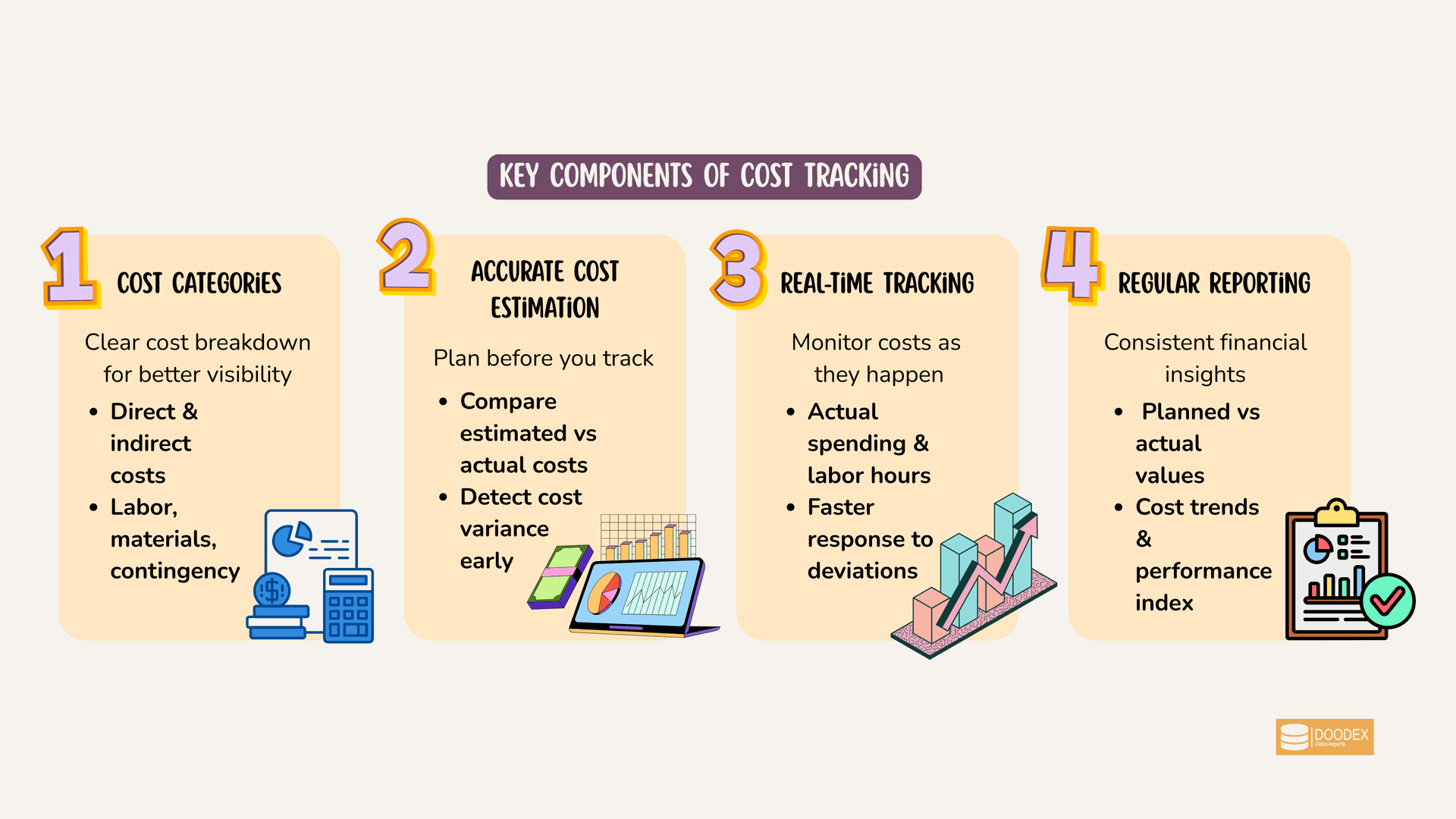
Structured cost tracking improves visibility, control, and financial performance.
Implementing a robust cost tracking system requires understanding its key components:
1. Cost Categories
Breaking down costs into categories like direct costs, indirect costs, labor costs, material costs, and contingency costs ensures clear visibility. A cost breakdown structure helps track total cost and project expenses effectively.
2. Accurate Cost Estimation
Before tracking actual spending, it’s vital to create accurate estimates of all project expenses. Comparing estimated costs with actual costs highlights cost variance, allowing teams to take corrective actions early.
3. Real-Time Tracking
Using project cost tracking software ensures real-time tracking of project data. Teams can monitor actual spending, labor hours, and material usage, enabling faster response to deviations and better financial performance.
4. Regular Reporting
Periodic reporting, aligned with the reporting period, ensures cost visibility for project managers and stakeholders. Reports can include planned values, actual expenses, cost trends, and the cost performance index for comprehensive insights.
Why Production Cost Tracking is Important
Cost tracking important for several reasons:
- Maintain Project Profitability: Tracking actual costs versus estimated costs ensures projects remain financially viable.
- Catch Issues Early: Early detection of cost overruns prevents hidden costs from escalating.
- Optimize Resource Allocation: Helps assign costs effectively to project team members and track progress.
- Support Financial Planning: Accurate cost data improves estimation accuracy for future projects.
Effective production cost tracking ensures that project managers can maintain spending limits, approve expenses responsibly, and monitor the project budget throughout the project lifecycle.
Manage Production Costs Smarter
Odoo implementation makes cost tracking clear and connected
How to Track Project Costs Effectively
Project cost tracking is essential for maintaining financial health, controlling project expenses, and ensuring project profitability. It requires a combination of software tools, structured cost tracking processes, and clear accountability among project managers and project team members. By implementing these best practices, businesses can achieve accurate cost tracking, detect deviations early, and optimize resource allocation. Here’s how to track project costs effectively:
1. Define the Project Scope
The first step in project cost tracking is to clearly define the project scope. This includes setting the approved budget, establishing planned values, and outlining all project tasks and milestones. By doing this upfront, project managers can identify the total cost of the project and set realistic expectations for direct costs, indirect costs, and labor costs. Defining the scope also helps in anticipating contingency costs and creating a structured cost breakdown structure for each project phase. A clearly defined scope prevents hidden costs from emerging later and ensures that all team members understand spending limits and responsibilities.
2. Assign Costs Accurately
Once the project scope is defined, the next step is to assign costs to every task and resource. This includes:
- Labor costs: Track the hourly rates and labor hours of each project team member.
- Material costs: Record costs for raw materials, supplies, and other direct costs.
- Indirect costs: Include overhead, administrative expenses, and any other hidden costs.
By allocating costs accurately, businesses gain a true picture of the project’s financial health. This structured cost assignment ensures accurate tracking, supports budget approvals, and provides cost visibility for stakeholders.
3. Use Project Cost Tracking Software
Modern project management software is a game-changer for effective project cost tracking. These tools allow businesses to:
- Track costs in real time, including labor, material, and indirect costs.
- Monitor multiple projects simultaneously, providing a holistic view of total cost across the organization.
- Maintain accurate cost data, helping project managers compare estimated and actual costs.
- Automate invoice tracking, expense approvals, and resource allocation.
By leveraging project cost tracking software, businesses reduce errors from manual tracking, improve cost estimation accuracy, and gain real-time insights into project expenses allowing teams to catch issues early and maintain project profitability.
4. Monitor Spending Continuously
Monitoring actual costs against estimated costs is an ongoing process that ensures cost control. Regular project cost tracking allows businesses to detect cost variance early and make necessary adjustments before overspending occurs. Key steps include:
- Reviewing labor hours, material usage, and indirect costs frequently.
- Comparing planned values to actual expenses at regular reporting periods.
- Analyzing cost trends to identify areas of overspending or inefficiency.
Continuous monitoring provides cost visibility for project managers and enables proactive decisions, ensuring that the project stays within the approved budget and meets financial performance goals.
5. Report Key Metrics for Insight
A critical part of project cost tracking is reporting. Tracking key metrics gives project managers the data they need to make informed decisions and communicate project health to stakeholders. Important metrics include:
- Cost performance index (CPI) to measure efficiency.
- Cost trends across the project lifecycle.
- Usage of contingency funds to handle unexpected costs.
- Comparison of estimated and actual costs to maintain accurate estimates for future projects.
Regular reporting ensures that project expenses remain transparent, supports financial decision-making, and allows the team to track progress and detect deviations early.
6. Implement Cost Control Measures
Finally, cost control is essential to prevent budget overruns and maintain project profitability. Effective measures include:
- Adjusting resource allocation based on actual spending and project needs.
- Approving expenses carefully and monitoring invoice tracking.
- Using software tools to identify hidden costs or inefficiencies.
- Setting spending limits and contingency funds to absorb unforeseen costs.
By actively controlling costs, businesses ensure accurate cost tracking, maintain project health, and create a reliable foundation for future projects.
Tracking project costs effectively is more than just a process it’s a discipline that combines planning, monitoring, reporting, and control. By defining the project scope, assigning costs accurately, leveraging project cost tracking software, continuously monitoring actual expenses, reporting key metrics, and implementing cost control measures, businesses can achieve accurate cost tracking, optimize resource allocation, and safeguard project profitability across multiple projects.
Turn Cost Tracking into Action
Get expert guidance to improve cost control and project profitability
Role of Project Managers in Cost Tracking
Project managers play a pivotal role in effective cost tracking:
- They oversee the project cost tracking process, ensuring all project expenses are recorded.
- They provide cost visibility to stakeholders and help approve expenses.
- They track resource allocation, including labor hours and hourly rates, to control project costs.
- They detect deviations early and make real-time decisions to maintain the project's financial health.
By empowering project managers with project cost tracking software, businesses can ensure accurate tracking, reduce hidden costs, and improve overall project health.
Tools for Project Cost Tracking
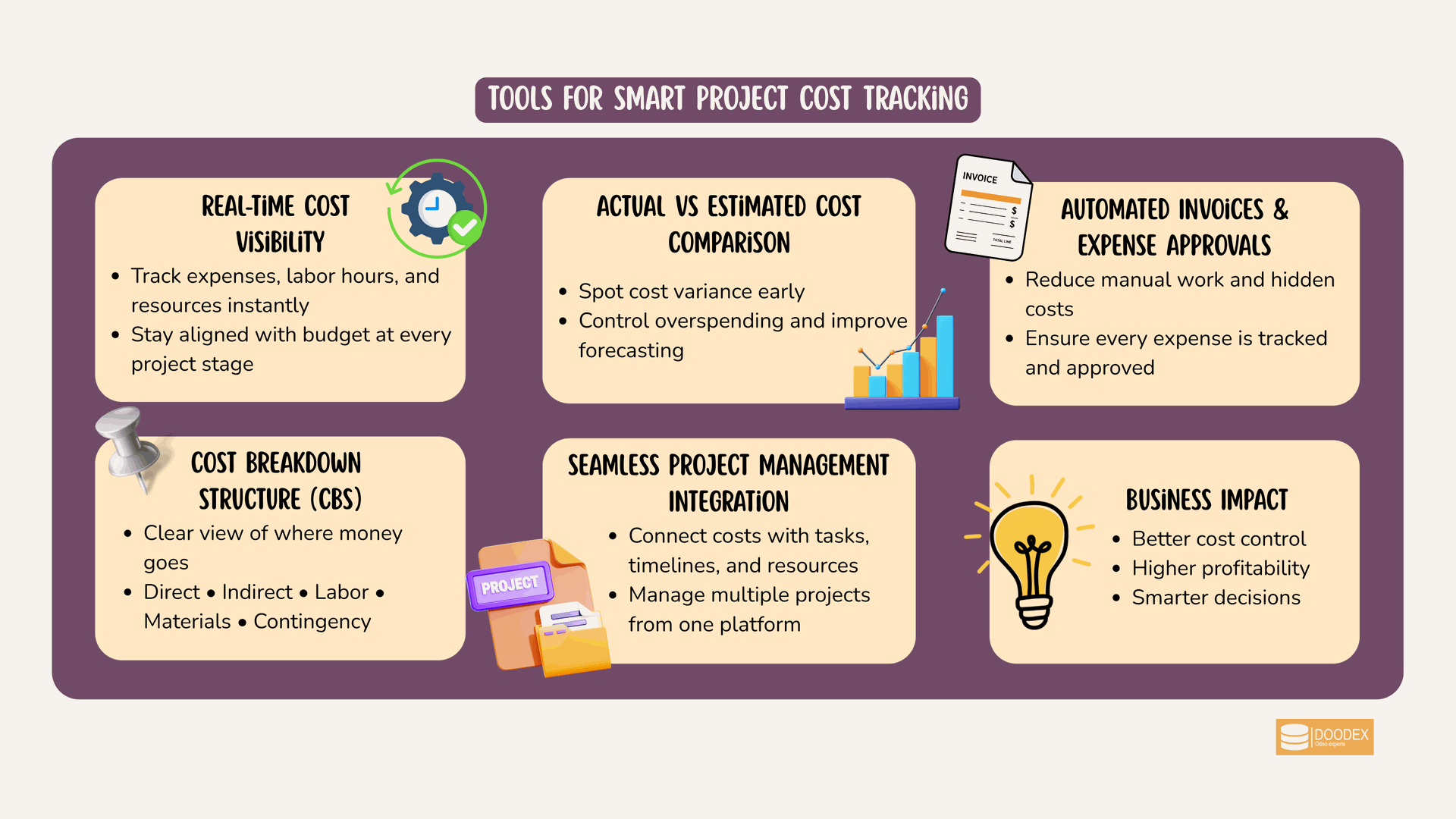
One platform to track, control, and optimize project costs in real time
Accurate project cost tracking requires more than spreadsheets or manual calculations it demands a robust tracking tool or project cost tracking software. The right tool not only records actual spending but also provides real-time insights into labor costs, material costs, and indirect costs, helping businesses maintain financial health and ensure project profitability.
Here are key features to look for in effective project cost tracking software:
1. Real-Time Tracking of Costs
Modern software allows real-time tracking of project expenses, labor hours, and resource usage. This capability ensures project managers and project team members have up-to-date information on actual costs versus estimated costs, enabling them to catch issues early and maintain control over the project budget. Real-time tracking also supports accurate cost data collection for reporting and improves cost visibility across the project lifecycle.
2. Compare Actual Costs with Estimated Costs
A powerful project cost tracking tool should allow teams to easily compare actual costs with estimated costs. This comparison highlights cost variance, helping project managers identify overspending or inefficiencies. Being able to see the difference between planned values and actual spending is critical for cost control, accurate forecasting, and improving estimation accuracy for future projects.
3. Automated Invoice Tracking and Expense Approvals
Handling invoices and expenses manually can lead to hidden costs, delays, and errors. A good software tool automates invoice tracking, expense approvals, and contingency fund management, ensuring that all project costs are recorded and accounted for. This reduces administrative overhead, supports accurate tracking, and gives project managers confidence in the project’s financial health.
4. Cost Breakdown Structure Reporting
A cost breakdown structure (CBS) organizes all cost categories, including direct costs, indirect costs, labor costs, material costs, and contingency costs. With this feature, project team members and managers can:
- Understand the total cost of each project phase
- Track project expenses by category
- Detect cost trends and spending limits
- Maintain project profitability and approved budgets
A CBS ensures accurate cost tracking and simplifies reporting for stakeholders.
5. Integration with Project Management Software
The best project cost tracking tools integrate seamlessly with project management software, linking cost data with task management, resource allocation, and project timelines. This integration allows teams to:
- Assign costs to specific tasks or team members
- Track project progress alongside spending
- Manage multiple projects in one platform
- Monitor real-time financial performance across projects
Integrated tools provide cost visibility, enhance control over project budgets, and make it easier to approve expenses and monitor spending.
6. Additional Benefits of Using Project Cost Tracking Tools
- Improved estimation accuracy for future projects
- Clear spending limits and financial accountability for project team members
- Ability to track direct, indirect, and contingency costs in one system
- Enhanced reporting for project managers and executives
- Faster detection of cost deviations and hidden costs
By using the right tracking tool, businesses can achieve accurate tracking, maintain project health, and optimize resource allocation while keeping all project expenses visible and controlled.
✨Pro Tip
Real-Time Cost Tracking Protects Profitability
Spreadsheets track numbers, but they don’t protect profitability. Use project cost tracking software with real-time visibility and actual vs estimated cost comparison to catch overruns early and keep projects on budget.
Managing Indirect Costs
While direct costs like labor and material costs are easier to track, indirect costs often remain hidden. These may include overhead, administrative expenses, or contingency funds. Using project cost tracking software allows businesses to assign costs accurately and ensure total cost reflects true project expenses.
Comparing Actual Costs with Estimates
An effective project cost tracking process requires comparing actual costs with estimated costs regularly. This helps:
- Identify cost variance early
- Adjust project budgets to avoid overspending
- Improve estimation accuracy for future projects
- Maintain project profitability and project health
Accurate estimates combined with real-time tracking empower teams to catch issues early and make data-driven decisions.
Cost Breakdown Structure for Better Control
A cost breakdown structure (CBS) is a detailed representation of all cost categories in a project. It helps in:
- Tracking project expenses across direct and indirect costs
- Monitoring labor costs, material costs, and contingency costs
- Providing cost visibility for project managers
- Maintaining spending limits and approved budgets
By implementing a CBS, businesses gain accurate cost data, enabling effective cost control throughout the project lifecycle.
Best Practices for Effective Production Cost Tracking
- Implement real-time tracking using project cost tracking software.
- Maintain accurate cost data for direct and indirect costs.
- Compare actual costs with estimated costs regularly.
- Assign cost categories clearly in a cost breakdown structure.
- Track labor hours and material costs for accurate tracking.
- Monitor cost trends to improve future projects.
- Use contingency funds to manage unexpected costs.
Support Better Cost Visibility
An Odoo module for real time cost tracking and clearer cost control
Conclusion
Effective production cost tracking is essential for businesses aiming to maintain project profitability and optimize financial performance. By implementing a structured cost tracking process, using project cost tracking software, and leveraging real-time data, project managers can maintain accurate cost tracking, control project expenses, and ensure every approved budget aligns with actual spending.
At Doodex, we provide solutions to streamline your project cost tracking, giving you cost visibility, helping your project team members make informed decisions, and empowering your business to track financially across multiple projects efficiently. Implementing these best practices ensures that your projects are not only on time but also on budget, safeguarding your company’s financial health for future projects.
FAQs
Production cost tracking is the process of monitoring and analyzing all project expenses, including material, labor, fixed, and indirect costs, to maintain financial health.
It allows businesses to detect cost variance early, optimize resource allocation, and ensure project profitability.
By using project cost tracking software, assigning cost categories, and comparing actual costs with estimated costs regularly.
A cost breakdown structure organizes all project costs into direct and indirect categories, improving cost visibility and control.
Real-time tracking provides instant insights into actual expenses, allowing teams to catch issues early and maintain project health.
Indirect costs, like overhead and contingency funds, can be hidden. Accurate cost assignment ensures total cost reflects true project expenses.
By comparing estimated costs with actual spending across multiple projects and analyzing cost trends for future projects.