
Implementing marketing inside Odoo is not about installing a few apps and sending emails. A successful Odoo marketing implementation means designing a system that captures leads, nurtures them with the right message, measures campaign performance, and hands off qualified prospects to the sales team — all inside a single system.
Many companies start with a blank Odoo database full of potential but quickly face problems: low quality leads, disconnected tools, manual follow ups, and marketing campaigns that don’t convert. This guide shows how to move from zero to a working, measurable sales funnel using Odoo marketing, powered by the Doodex Growth Suite.
You’ll learn how to structure your Odoo marketing setup, choose the right marketing apps for Odoo, automate repetitive tasks, and build advanced marketing workflows that support real business operations — not just marketing theory.
Key Takeaways
- Odoo marketing implementation is a system, not a feature
- Strategy must come before automation
- Campaigns need structure, ownership, and data
- Lead nurturing drives conversion, not volume
- Marketing and sales must operate in one workflow
- Doodex Growth Suite turns Odoo into a growth engine
Key Takeaways
Why Odoo Marketing Implementation Fails Without Structure
Understanding Odoo Marketing Implementation from a Business Perspective
What “Odoo Marketing Implementation” Really Means
Step 1: Defining Your Marketing Strategy Inside Odoo
Key Questions to Answer
Step 2: Installing the Right Marketing Apps for Odoo
Core Modules in Doodex Growth Suite
Step 3: Odoo Marketing Setup – Building the Campaign Foundation
a. Centralized Campaign Management
b. Marketing Campaigns That Actually Convert
Step 4: Lead Generation with Bizscan and Smart Capture
a. Why Lead Generation Breaks Without Automation
b. Bizscan in Action
Step 5: Lead Management Inside a Single System
From Raw Leads to Relevant Leads
Step 6: Odoo Marketing Automation Without Complexity
a. Practical Marketing Automation
b. Email Marketing That Feeds the Funnel
c. Lead Nurturing Across Multiple Touchpoints
Step 7: Converting Leads into Sales Opportunities
a. Bridging Marketing and Sales
b. Sales Funnel Visibility with Real Data
Step 8: Measuring Campaign Performance
a. What Gets Measured Gets Improved
b. Optimizing Odoo Marketing for Growth
Common Odoo Marketing Implementation Mistakes (And How to Avoid Them)
Conclusion
FAQs
Why Odoo Marketing Implementation Fails Without Structure
Most Odoo marketing setup failures come from the same root problems:
- Marketing apps installed without a strategy
- Leads collected but never nurtured
- No visibility into campaign performance
- Disconnected email, CRM, and sales operations
- Repetitive tasks wasting team time
- Low conversion rates despite high lead generation
Odoo provides powerful business applications, but implementation matters more than features. A working funnel requires:
- A defined marketing strategy
- Structured lead management
- Measurable marketing campaigns
- Automated follow ups
- Seamless CRM and sales integration
A structured approach is essential to streamline marketing workflows, ensuring processes are efficient and reducing the risk of common implementation failures.
This is where the Doodex Growth Suite transforms Odoo from a toolset into a growth system.
Supercharge Your Odoo Today
Get the full Doodex Growth Suite and streamline operations from day one
Understanding Odoo Marketing Implementation from a Business Perspective
What “Odoo Marketing Implementation” Really Means
Odoo marketing implementation is not just installing marketing apps for Odoo. It is the process of:
- Designing a sales funnel
- Mapping marketing touchpoints
- Connecting campaigns to CRM data
- Automating repetitive tasks
- Tracking campaign performance
- Converting leads into opportunities
- Aligning marketing and sales teams
With Doodex Growth Suite, marketing is no longer isolated. Every action—email, event, social post, call, scan, or follow up—becomes part of a single, traceable workflow.
Step 1: Defining Your Marketing Strategy Inside Odoo
Before any configuration, you must define how marketing supports your specific business needs.
Key Questions to Answer
- Who is the right prospect?
- What qualifies a relevant lead?
- How do we re-engage inactive contacts?
- How does marketing use automated workflows to lead forward prospects to sales, advancing them through the funnel based on actions like email engagement?
- Which campaigns generate real opportunities?
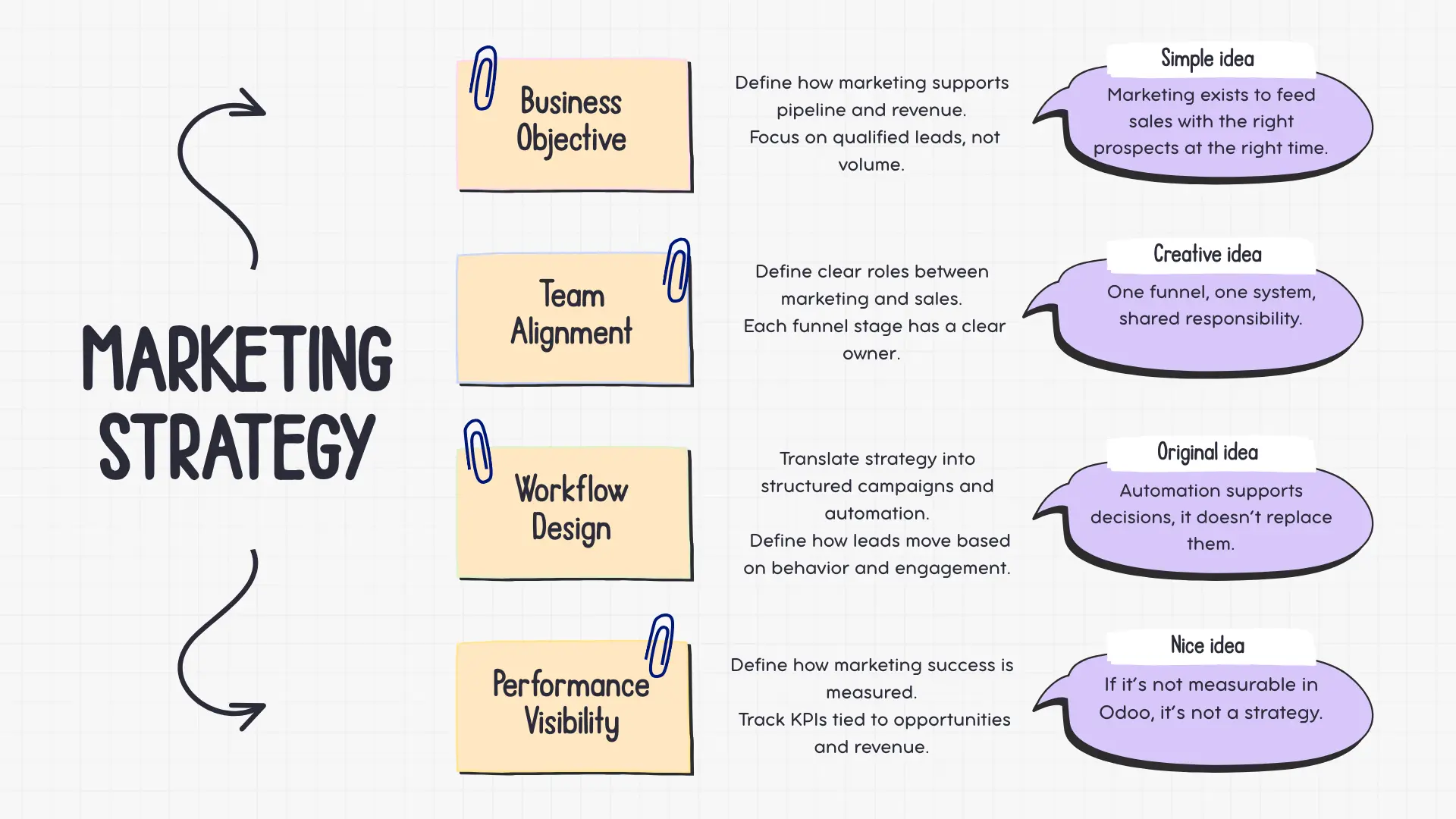
Marketing Strategy Inside Odoo
A strong marketing strategy inside Odoo focuses on:
- Lead generation
- Relevant lead nurturing campaigns
- Multi stage campaign execution
- Clear ownership between marketing and sales
Doodex Growth Suite ensures strategy translates into execution—not documents.
Step 2: Installing the Right Marketing Apps for Odoo
Core Modules in Doodex Growth Suite
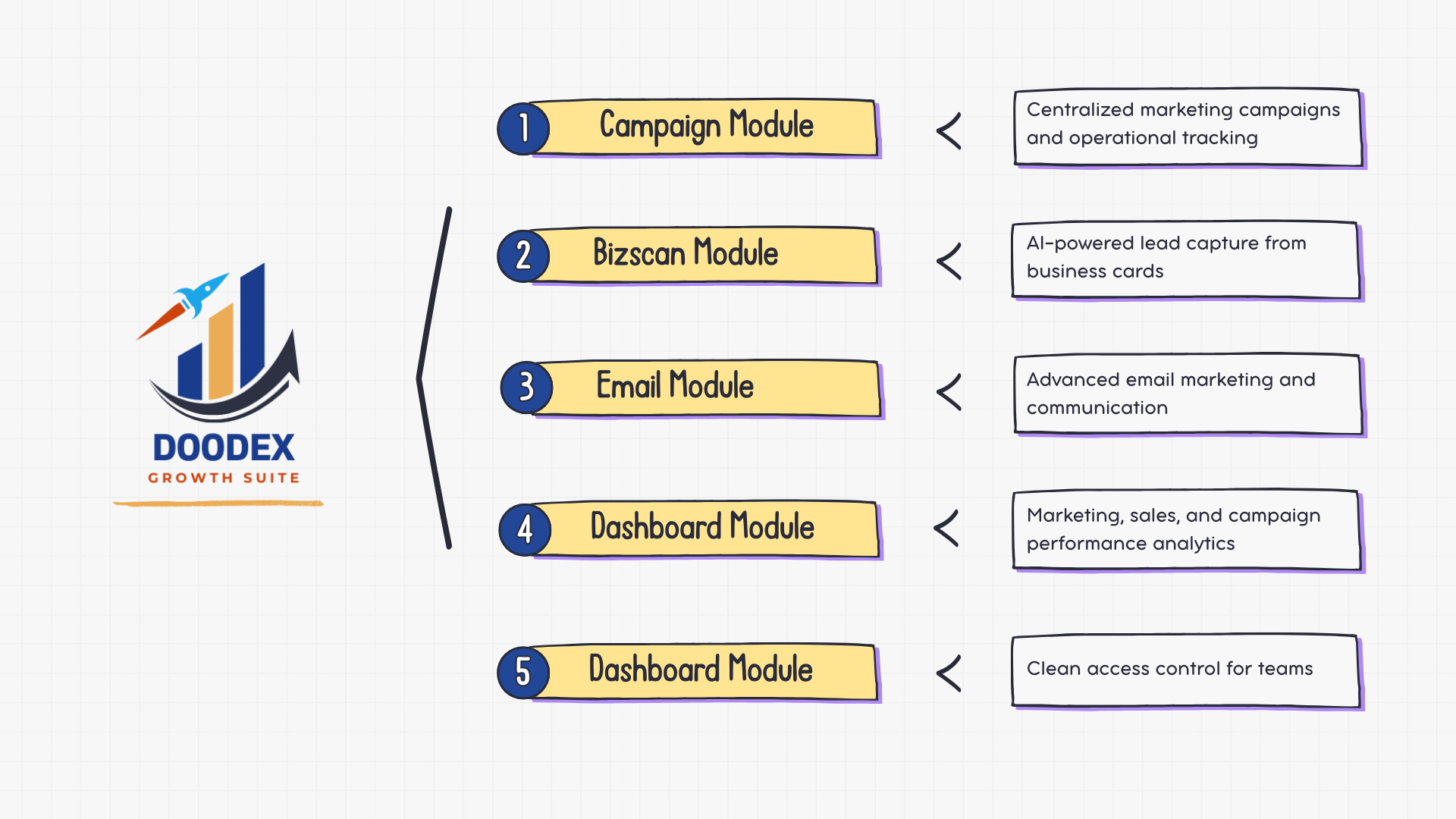
Doodex Growth Suite Modules
The Doodex Growth Suite extends the Odoo marketing suite with production-ready tools:
- Campaign Module – Centralized marketing campaigns and operational tracking
- Bizscan Module – AI-powered lead capture from business cards
- Email Module – Advanced email marketing and communication
- Dashboard Module – Marketing, sales, and campaign performance analytics
- User Roles Module – Clean access control for teams
Together, these modules create complete integration across marketing, CRM, and sales.
Step 3: Odoo Marketing Setup – Building the Campaign Foundation
a. Centralized Campaign Management
Unlike default Odoo marketing automation, Doodex Campaigns focus on traceability, collaboration, and outcomes.
Each campaign includes:
- Clear objectives
- Indicators and KPIs
- Specific measurable fields
- Members (contacts or companies)
- Participants (internal team)
- Activities and follow ups
- Linked leads and opportunities

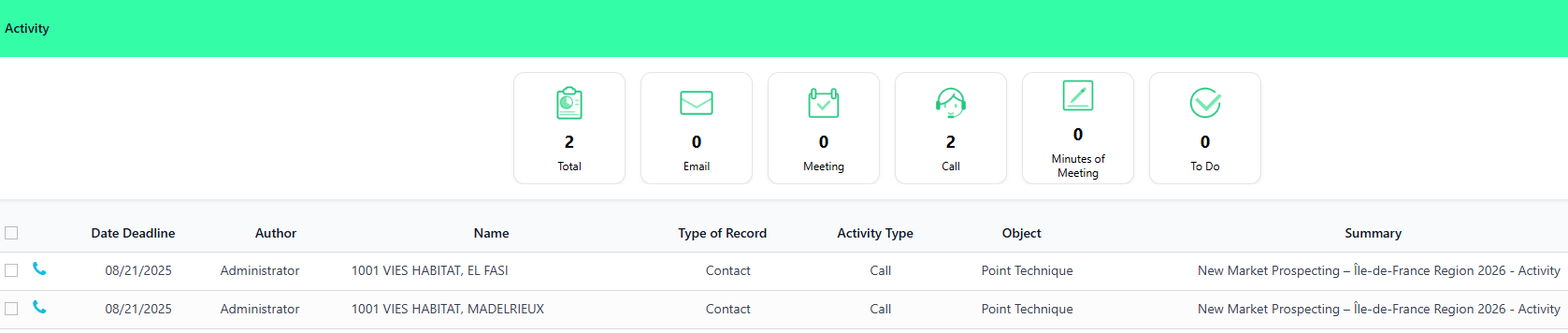
Activity Overview in Campaign Module

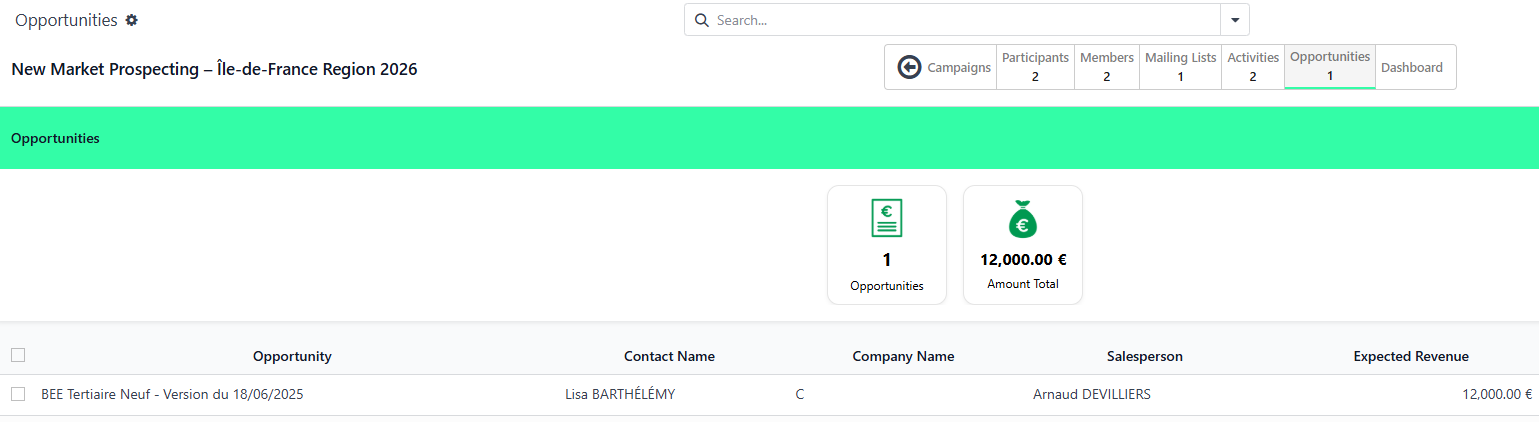
Opportunities in Campaign Module
This structure transforms campaigns from emails into operational marketing workflows.
b. Marketing Campaigns That Actually Convert
A typical marketing campaign workflow:
- Create campaign
- Assign team roles
- Add members (leads, prospects, customers)
- Define indicators
- Launch activities
- Monitor dashboard
- Optimize results
This enables businesses to run targeted campaigns effectively instead of generic outreach.
Step 4: Lead Generation with Bizscan and Smart Capture
a. Why Lead Generation Breaks Without Automation
Manual data entry causes:
- Delayed follow ups
- Missing data
- Low lead quality
- Lost opportunities
Bizscan solves this by instantly converting business cards into leads, contacts, and campaign members.
b. Bizscan in Action
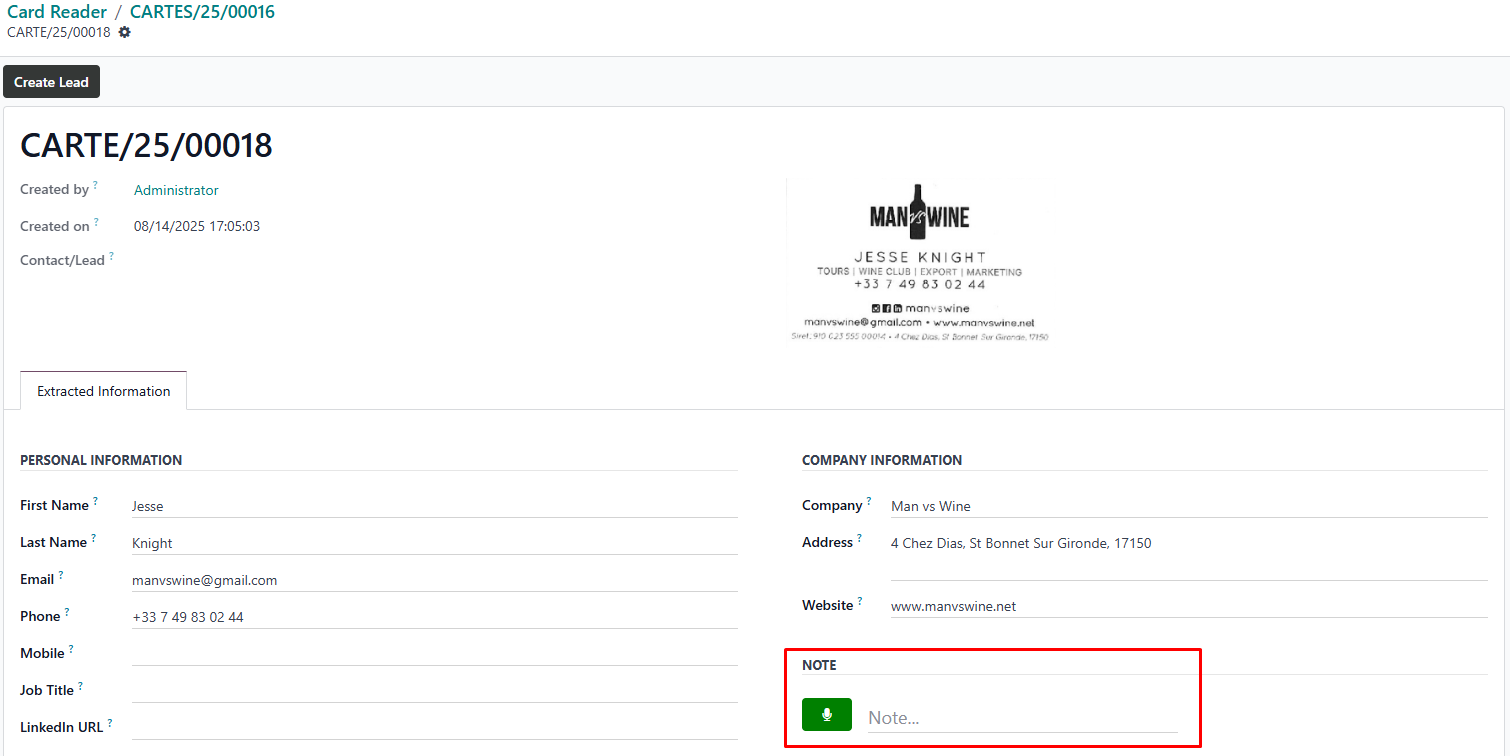
Review contact details for accuracy and add notes by voice or text for context.
- Scan or upload business card
- AI extracts contact data
- Contact is created in Odoo
- Automatically linked to campaign
- Ready for lead nurturing
This turns offline interactions into digital lead generation inside Odoo marketing.
Step 5: Lead Management Inside a Single System
From Raw Leads to Relevant Leads
Lead management inside Odoo becomes powerful when marketing and CRM work together.
Doodex enables:
- Automatic lead creation from emails
- Campaign-linked leads
- Lead qualification tracking
- Activity-based follow ups
- Ownership visibility for sales team
Low quality leads are filtered early, while hot ones move quickly to sales.
Step 6: Odoo Marketing Automation Without Complexity
a. Practical Marketing Automation
Odoo marketing automation should:
- Save time
- Reduce repetitive tasks
- Improve conversion rates
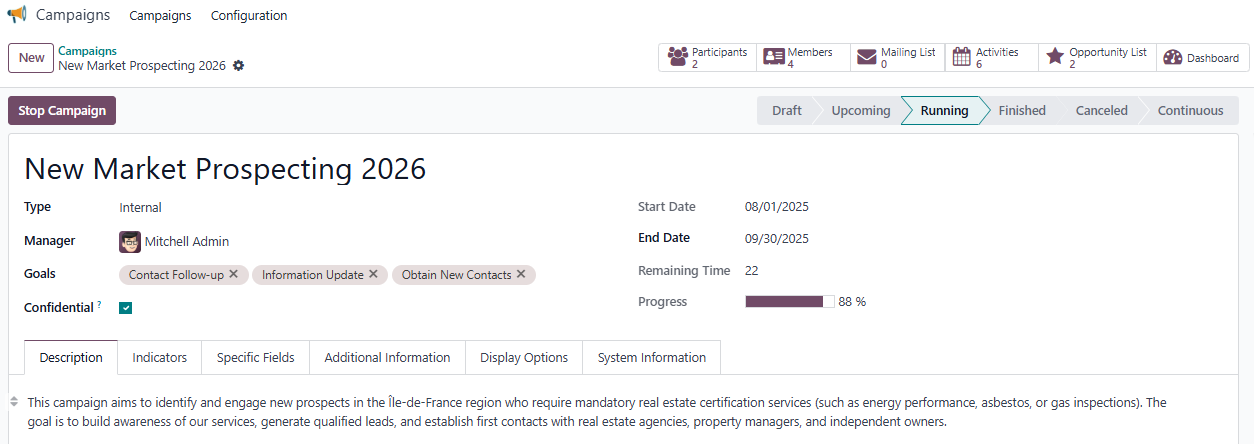
Odoo campaign dashboard with real-time visibility into campaign progress, activities, and opportunities
With Doodex:
- Activities trigger follow ups
- Email campaigns link to campaigns
- Time triggers support multi stage campaign logic
- Sales teams receive relevant leads only
This approach focuses on automating repetitive tasks while keeping human control.
b. Email Marketing That Feeds the Funnel
Advanced Email Marketing in Odoo
Email marketing works best when it’s connected.
Doodex Email Module supports:
- Email templates
- CC/BCC tracking
- Gmail synchronization
- Automatic lead creation
- Email campaigns linked to CRM
Every email becomes part of the lead nurturing journey, not an isolated message.
c. Lead Nurturing Across Multiple Touchpoints
Multi Stage Campaign Execution
Effective lead nurturing uses:
- Email content
- Social posts
- Events
- Calls
- Meetings

Assign meetings, follow-ups, emails, and approvals to campaign members directly inside Odoo.
Doodex Campaigns allow:
- Tracking each interaction
- Assigning activities to team members
- Monitoring progress in real time
- Re-engaging inactive leads
This ensures the right message reaches the right prospect at the right time.
Step 7: Converting Leads into Sales Opportunities
a. Bridging Marketing and Sales
Marketing success means nothing if leads don’t convert.
With Doodex:
- Leads are linked directly to campaigns
- Sales teams see campaign context
- Opportunities inherit marketing history
- Follow ups are structured
This alignment improves conversion rates and reduces friction between teams.
b. Sales Funnel Visibility with Real Data
Tracking the Full Funnel
Doodex Dashboard provides:
- Sales funnel visibility
- Campaign performance metrics
- Activity tracking
- Lead conversion analysis
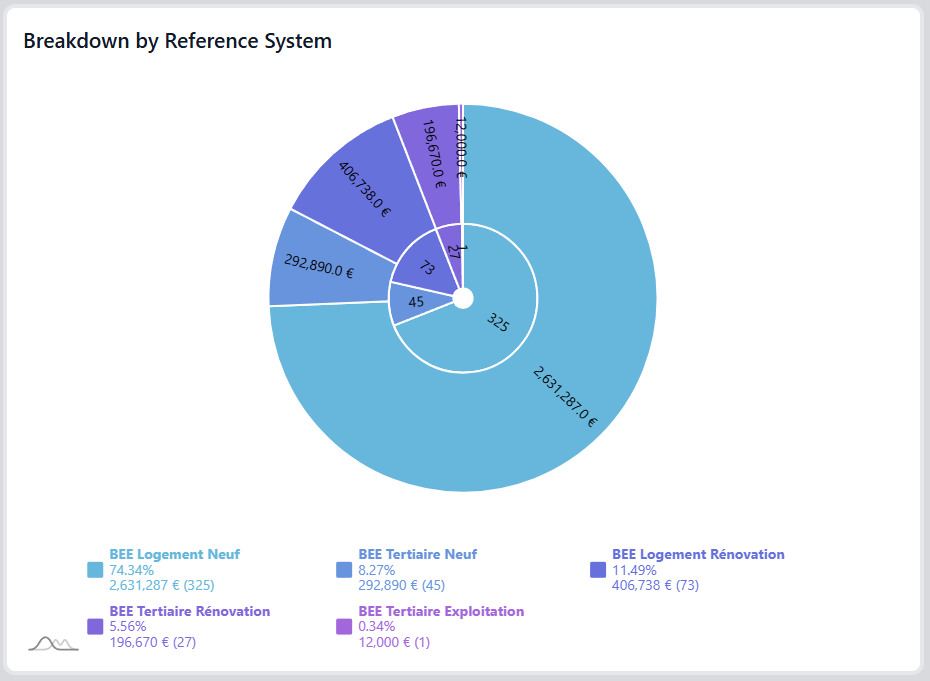
Visual breakdown inside the dashboard module for tracking opportunity distribution by reference system.
Managers can:
- Optimize campaigns
- Identify drop-off points
- Improve workflows
- Make data-driven decisions
Everything lives in a single system.
Step 8: Measuring Campaign Performance
a. What Gets Measured Gets Improved
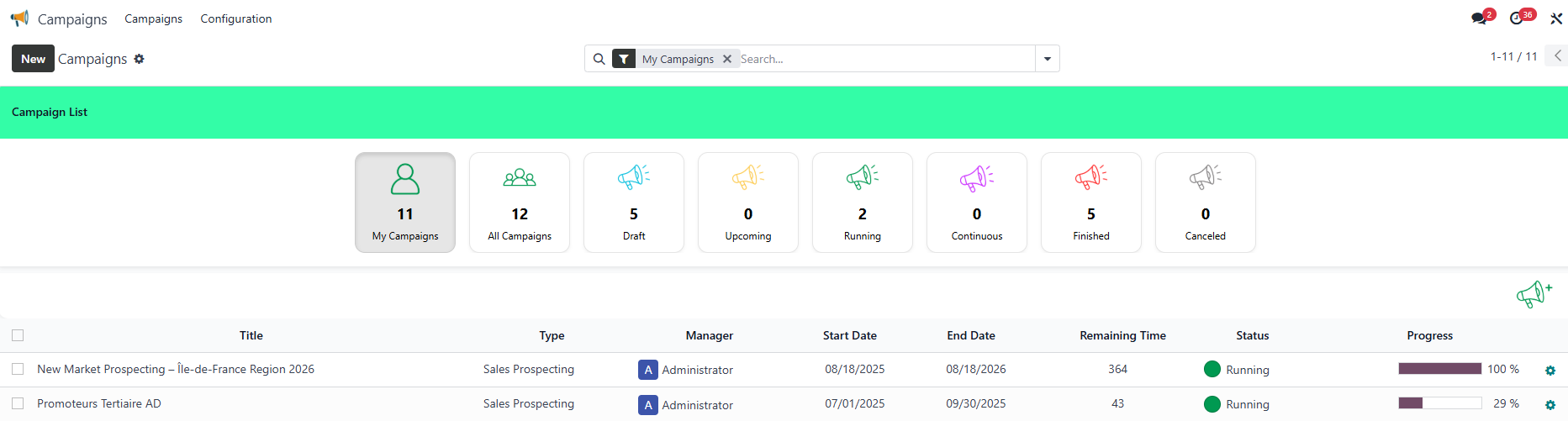
Campaign list view showing all campaigns with status, progress, dates, and quick navigation filters.
Doodex Campaign Indicators track:
- Number of leads
- Qualified opportunities
- Revenue impact
- Activity completion
- Progress percentage
This transforms marketing from guesswork into measurable business operations.
b. Optimizing Odoo Marketing for Growth
Continuous Optimization Loop
- Launch campaign
- Monitor data
- Identify bottlenecks
- Adjust strategy
- Improve execution
Doodex enables businesses to manage, optimize, and scale marketing efforts without adding tools.
✨Pro Tip
Design the funnel before touching the settings
Before installing apps or configuring automation, map the full journey on paper first:
lead source → campaign → nurturing actions → qualification → sales handoff
When the funnel logic is clear, Odoo configuration becomes simple, focused, and scalable.
Clear flow first → cleaner data → higher conversion → less rework
Common Odoo Marketing Implementation Mistakes (And How to Avoid Them)
Even though Odoo offers powerful marketing tools, many Odoo marketing implementation projects fail to deliver results. The reason is rarely technical — it’s almost always structural. Below are the most common mistakes companies make, and how the Doodex Growth Suite prevents them by design.
1. Installing Apps Without Workflows
One of the most common mistakes in Odoo marketing setup is installing multiple marketing apps from the Odoo App Store without defining how they work together.
This usually results in:
- Email marketing operating separately from CRM
- Leads entering the system with no follow-up logic
- Manual tasks replacing automation
- Teams unsure what action to take next
Marketing tools without workflows create activity, not progress.
💡How to avoid it:
Start with workflows, not features. Define how a lead moves from first contact to conversion, then configure Odoo and Doodex modules around that flow. Doodex enforces structured workflows through campaigns, activities, and defined participant roles — ensuring every action moves the lead forward.
2. Running Campaigns Without KPIs
Many companies launch marketing campaigns inside Odoo without defining what success actually looks like.
Without KPIs, campaigns become:
- Hard to evaluate
- Impossible to optimize
- Difficult to justify internally
- Disconnected from business outcomes
Sending emails or running social marketing alone does not equal performance.
💡How to avoid it:
Every campaign must have measurable indicators tied to business goals. Doodex campaigns are built around KPIs by default, allowing teams to track progress, outcomes, and conversion rates in real time. This makes performance visible and actionable instead of subjective.
3. Not Linking Marketing to CRM
Another major Odoo marketing implementation failure is treating marketing as a standalone function.
When marketing is not linked to CRM:
- Sales teams receive leads without context
- Marketing cannot track conversions
- Opportunities cannot be attributed to campaigns
- Feedback loops are broken
This disconnect leads to frustration on both sides.
💡How to avoid it:
Marketing and CRM must operate as one system. Doodex ensures that every lead, activity, and opportunity can be linked directly to a campaign, giving sales full visibility into the prospect’s journey and allowing marketing to measure real revenue impact.
4. No Ownership Between Teams
Marketing initiatives fail when ownership is unclear.
Without defined responsibility:
- Campaigns lose momentum
- Follow ups are missed
- Data becomes inconsistent
- Accountability disappears
This is especially common in cross-functional teams where marketing, sales, and operations overlap.
💡How to avoid it:
Every campaign must have a responsible owner, contributors, and clearly defined permissions. Doodex introduces role-based campaign ownership, ensuring accountability while enabling collaboration across teams — without confusion or overlap.
5. Ignoring Campaign Dashboards
Many organizations implement dashboards but rarely use them.
When dashboards are ignored:
- Problems are discovered too late
- Opportunities for optimization are missed
- Decisions rely on assumptions instead of data
- Marketing becomes reactive instead of strategic
Dashboards only create value when they are part of the workflow.
💡How to avoid it:
Campaign dashboards should be reviewed regularly and tied to decision-making. Doodex dashboards are designed for operational use, not vanity metrics, making it easy to monitor campaign performance, team activity, and lead progression at a glance.
Conclusion
A successful Odoo marketing implementation is not about installing tools—it’s about building a connected growth system. With Doodex Growth Suite, businesses move from disconnected marketing activities to fully integrated, automated, and measurable funnels.
Odoo Website can be used to create SEO-friendly landing pages for lead generation and to strengthen your online presence.
If your goal is real lead generation, effective lead nurturing, and higher conversion rates, Doodex turns Odoo into the marketing engine it was meant to be.
Looking for a Bespoke Odoo Solution?
Tell us what you need and we’ll adapt the system for a perfect fit
FAQs
No. It works alongside Odoo’s marketing apps, enhancing them with structure, traceability, and better automation across campaigns, leads, and CRM.
Yes. Campaign indicators, fields, and workflows can be customized to match different industries, sales cycles, and marketing strategies.
Yes. Doodex is designed to scale easily, making it suitable for startups, growing teams, and larger organizations without adding complexity.
By tracking interactions, filtering low quality leads, and focusing on relevant lead nurturing instead of lead volume.
Yes. Sales teams have full visibility into campaign history, emails, and activities inside the same Odoo system.
Email marketing is fully supported. SMS marketing can be added through Odoo extensions and integrations.
With Doodex, a working marketing funnel can typically be live in weeks rather than months.