
Why do Odoo implementation projects fail? 2026
Odoo implementation projects rarely fail because of the software — they fail on execution: scope that was never properly mapped, a rushed data migration, over-customization that fights the product, and no one inside the business owning the result. Every one of those causes is avoidable, and the clearest sign that a project will land is a partner who can show it with numbers rather than promise it with adjectives: across 13 years, 100% of our projects have gone live, and our first client is still running Odoo today. Below are the real reasons projects fail, then the three questions buyers ask most after one bad experience — moving off a current system, holding up at high volume, and what happens if the partner leaves.
What actually makes an Odoo project fail?
Almost every failed Odoo project traces back to the same short list of execution mistakes — not to Odoo itself. Naming them plainly is the first step to avoiding them:
Scope invented instead of discovered
Teams often start configuring modules before anyone has documented how the business actually runs day to day. The result is a system built around a guessed process — it fits old habits badly, forces awkward workarounds, and feels wrong the moment real users touch it. The fix is unglamorous but decisive: a proper discovery up front that maps the real workflows, edge cases and the numbers that matter, before a single screen is configured.
A rushed data migration
When data cleanup is treated as a last-minute technical chore, the new system goes live with duplicate customers, missing history and opening balances no one trusts — and distrust in the first week is hard to recover. Clean, validated, well-mapped data is not a detail at the end of the project; it is part of the project from the start.
Over-customization
Because Odoo is flexible, it is tempting to rewrite standard screens and logic to copy exactly how things were done before. That is how a system becomes fragile: native workflows break, upgrades turn painful, and spend climbs. The discipline is to keep the build close to standard and customize only where the business is genuinely different.
No internal owner, and change management ignored
Software does not adopt itself. Without someone inside the business owning the project, making decisions and bringing people along, employees quietly fall back on spreadsheets and the tool gets blamed for a people problem. A named internal owner plus role-specific training is what turns a go-live into a system people actually use.
Every one of these is a management and execution issue, not a software one — which is why the real predictor of success is a disciplined method run by a team that has done it before. In our case that shows up as a number: 100% of our projects have gone live across 13 years.
Is Odoo hard to implement when you move from your current system?
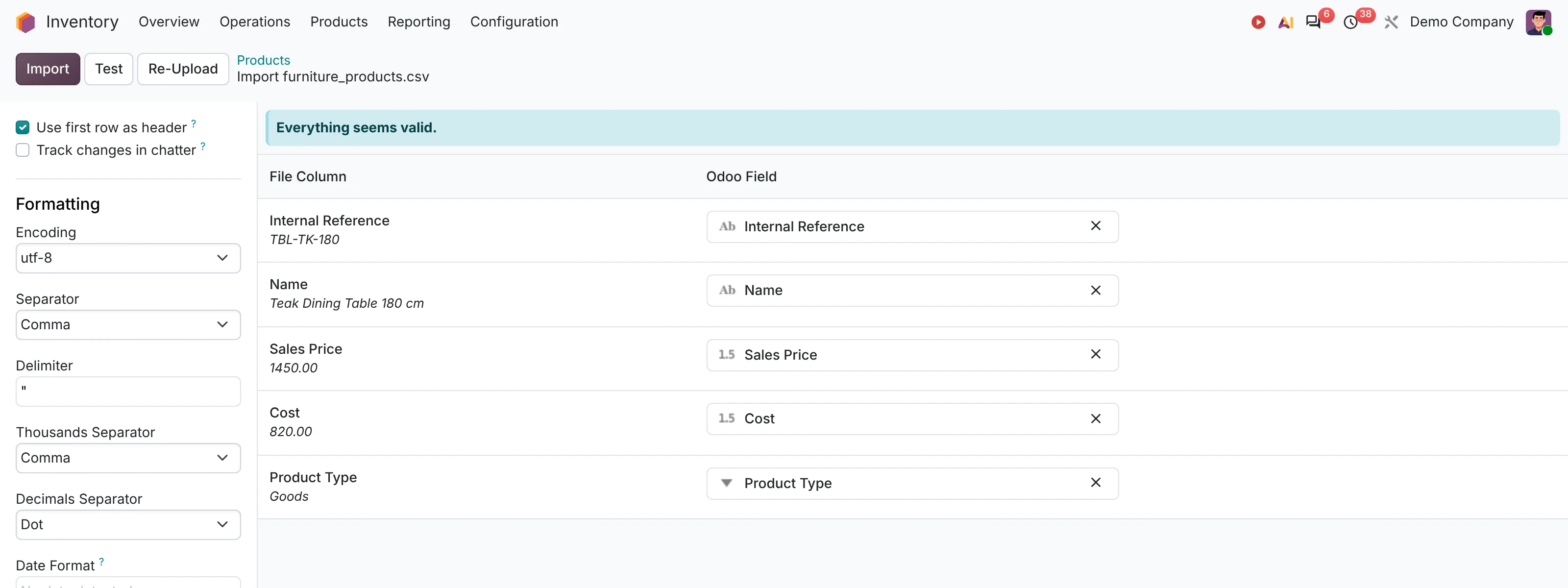
No — not when the switch is run as a staged migration instead of a last-minute data dump. The hard part of moving systems is not the software; it is the discovery — mapping how the business actually works before anything is configured — and that is a one-time exercise, not an ongoing cost. The way to carry the data across is to migrate in waves, with the scope attached to each wave: clean, map and validate one data set at a time (master data first, then open transactions, then history), run the business on both systems where it reduces risk, and retire the old system only once each wave is reconciled and signed off. Because each wave has a defined scope, you always know what is moving, what has moved, and what is left — moving from an existing system becomes a planned project with a known shape, not a leap in the dark. That discipline is a large part of why 100% of our projects have gone live in 13 years. The wave-by-wave sequence is set out in the Doodex method, from diagnostic to production.
Is Odoo robust enough for a complex manufacturer with high volumes?
Yes — and the way you keep it robust is to stay close to native Odoo rather than rewrite it. The single most common cause of an unstable, hard-to-upgrade system is over-customization: rewriting standard screens and logic to copy old habits, which breaks native workflows, inflates spend, and makes every future version update painful. A complex, high-volume manufacturer does not need Odoo rebuilt; it needs Odoo configured well and kept close to standard — using the native modules and supported extension points, and reserving custom development for the few places where the business is genuinely different, not for re-creating the old system inside the new one. Kept that way, the system holds as transaction volume climbs, and each yearly upgrade stays a routine move instead of a re-implementation, which is what “robust” really means over a five-year horizon. Every one of our projects — simple and complex — has reached go-live and stayed in production, which is the real test of whether a setup holds at volume. How we scope and run that build is set out in our Odoo implementation services.
What happens to your Odoo system if your partner stops working with you?
Your system keeps running — and the way to size that risk up front is the partner's track record and how close the build stays to standard Odoo. A project built close to native Odoo is not locked to one vendor's private code: it is a standard Odoo system that can be picked up and continued. Two things make that real at Doodex. First, the record: we are an Official Odoo Partner with 13 years on Odoo, and our very first client is still running the system today — continuity is something we can show, not just claim. Second, the team shape: every project runs with a minimum of one project manager plus one developer, so knowledge of your setup never sits with a single person, and the configuration, data and documentation always stay yours. Because the build stays close to standard Odoo, a handover is a normal exercise rather than a rescue: the system, its data and its documentation can be picked up and continued. You are choosing a system you could hand to any competent Odoo team — and a partner with the years, and the live first client, to show it tends to stay. What to look for before you sign is covered in how to choose an Odoo manufacturing partner.
Should you start on Odoo Community or Enterprise?
It depends on the modules and the level of support you need — and the real failure here is choosing a version without realising its limits. Odoo Community is free and open, but it leaves out some apps and the vendor's official support; Enterprise adds those, along with the modules and the maintenance most growing manufacturers end up needing. The mistake that quietly sinks projects is picking Community purely to save money, then hitting a wall on a missing feature or on support halfway through — and stalling. The right move is to map the version to your actual scope before you commit: list the modules you truly need, decide how much official support matters, and choose on that basis rather than on headline cost. We size that choice against your real requirements at the start, so the version you begin on is the one you can still run in three years.
What a Doodex implementation actually delivers
100% of our projects have gone live — across 13 years on Odoo.
Our first client is still running Odoo today.
Every project runs with a minimum team of one project manager + one developer — no single point of failure.
Migrations are quoted and run in waves, with the scope attached to each wave.
5/5 client satisfaction.
Book a meeting with Doodex
Talk to an Odoo Official Partner with 13 years on Odoo — 100% of our projects have gone live.
FAQ
So Odoo projects don't fail because of the software?
Rarely. Failures almost always trace back to execution — scope, data migration, over-customization, and no internal owner — not to Odoo itself.
What is the single biggest cause of failure?
Skipping real discovery. Configuring before the business is mapped forces the software to fit guessed processes, and everything downstream inherits that mistake.
How risky is moving off our current system?
Manageable when it's staged: migrate in waves with the scope attached, clean and validate each data set, and retire the old system only once each wave is proven.
Will heavy customization make Odoo more capable?
Usually the opposite — over-customization is a top cause of instability and painful upgrades. Staying close to native Odoo is what keeps a complex, high-volume system robust.
What if we need to change partners later?
A system kept close to standard Odoo can be continued by any competent Odoo team; it isn't locked to one vendor's custom code, and your data and documentation stay yours.
Should we start on Odoo Community or Enterprise?
It depends on the modules and support you need; the risk to avoid is choosing a version without realising its limits. We map that to your scope before you commit.
How do you keep users from abandoning the new system?
A named internal owner, a system that matches real workflows, and role-specific training — which is why our projects reach go-live and stay in production.
Written by Jeff (Jean-François Taille) — Odoo Official Partner, 13 years on Odoo. Across those 13 years, 100% of our projects have gone live, and our first client is still running the system today.